
 by
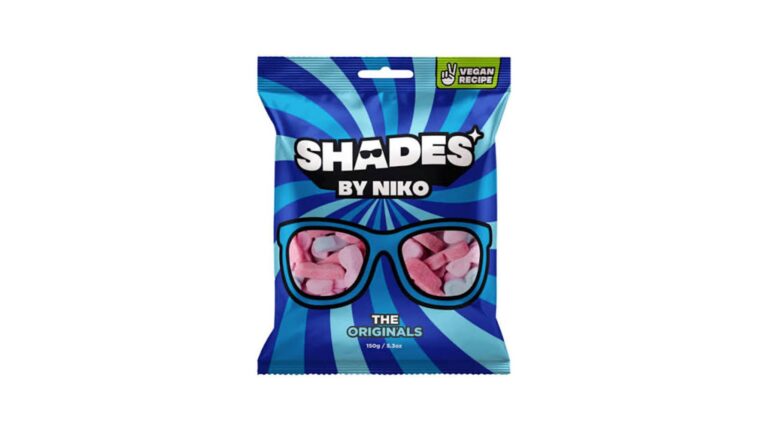

There is a sweets brand in Britain right now that, on paper, needs nothing from our industry. By that, I mean the advertising and marketing industry and, specifically, immersive marketing.
The brand is called Shades by Niko, it comes from the YouTuber Niko Omilana, and the sweets are shaped like the children’s sunglasses he wore when he ran for Mayor of London in 2021. Omilana has around 8.75 million subscribers. The brand launched in May 2025 and did 15.8 million pounds of sales inside its first year, which put it in this year’s NIQ Million Club. It is in Sainsbury’s, in Co-op, in WH Smith Travel, in Booker.
Reach, affinity, cultural permission, national distribution. Every box our industry ticks when it decides whether a brand needs help.
So why run a campaign at all?
The answer our field usually gives is that everyone needs more awareness. That answer is wrong here, and being wrong about it is why we keep pitching to the wrong companies.
Reach Can’t Buy Participation
What reach cannot buy is participation.
A follower watches for a few seconds and moves on. That is not a criticism of the format, it is the format. Attention is bought in seconds and it is spent the moment it is delivered. Nobody comes back tomorrow because they saw a post yesterday. Nobody organises their Saturday around a piece of content.
Time is a different commodity from attention, and almost nothing in the marketing stack produces it. You can buy a hundred million impressions and not one person who chose to spend a fortnight with you.
That is what a brand in this position is actually short of, and it is the thing the immersive marketing industry segment is uniquely able to build.
Not an Ad
So the campaign that we at Pikd are running with Shades is not an advertisement. It is a game that runs for weeks. People explore real places, find things that are not there, collect them, and climb a leaderboard. None of that costs anyone a penny.
You can see the intent most clearly in the prizes, because prizes are where a campaign tells you what it really thinks it is. The rewards here are not discounts. They are the things a fan of this brand would actually want and cannot get any other way. A year’s supply. Access to the people behind it. Things that only exist inside the game.
Nobody designs a prize list like that to shift units this week. You design it that way because the prize has to be worth playing for, and because you are asking for something more expensive than money.
Commerce & Conversions
That brings me to where commerce sits in all of this, because it is the part I would defend hardest and the part most likely to get argued out of a brief.
Playing earns you rank. Playing is also what unlocks a shot at the instant prizes. A purchase is the key to that shot. And spending never earns you rank, not once, not at any tier.
Read that again, because the negative half is the important half. There is a version of this campaign where buying moves you up the leaderboard, and it would be easier to sell, easier to justify, and dead on arrival. The moment spending buys position, the game is a spending contest. The audience works that out within days, because audiences always do. And the goodwill that made the brand worth activating is exactly what pays for the conversion you would probably have gotten anyway.
Keep the two currencies separate, and the purchase stays a gate rather than a wallet. The commercial outcome becomes a by-product of a game people wanted to play, instead of the thing being extracted from them while they play it.
That is a design constraint with a cost, and I would rather state it plainly than pretend it was free.
Change of Target
The broader point for anyone selling in this space is a change of target, not a change of pitch.
We in the marketing world spend our time chasing brands that need to be noticed, because that is the conversation we know how to have. It is the easier meeting and it is the weaker fit, because a brand that needs noticing usually needs media, and media is cheaper than us and better at it.
The brand that has everything except participation is the one this immersive format actually suits. It has already won the part we cannot help with. What it is missing is the only thing we are genuinely good at: giving somebody a reason to spend real time, in real places, with a brand they already like.
So change the qualifying question. Not “how many people know you”, which is what everyone asks. Instead: how many people like you as a brand, and have never once done anything about it? For most brands that number is small. For the ones at the top of the attention economy, it is nearly all of them, and it is the largest addressable market the immersive marketing industry has.
A Thesis Stated Before
One honest caveat, since this is a trade publication and not an advertisement. The campaign is live. I do not know whether it works. That is precisely why I am writing this part now rather than afterwards, because a thesis stated before the data is a test, and a thesis stated after it is a press release.
If participation is really the product, it should show up most legibly here, on a brand where awareness is saturated and the only remaining variable is whether anybody chooses to join in. There is nowhere for the effect to hide.
I will publish what happens either way.
Abtin Aghagolian
AR Insider Guest Author