
 by
Welcome back to our weekly roundup of happenings from XR and AI realms. Let’s dive in…
The Lede
Musk Promises SpaceX Shares to Every American Child as Anthropic Pledges 5% to Public Benefit. On October 18, Anthropic announced plans to commit 5% of its equity to a company-controlled public benefit fund, potentially worth tens of billions of dollars. The next day, Elon Musk pledged to give one SpaceX share to every child in America in 2027, an estimated $10.5 billion distribution. Anthropic’s proposal requires shareholder approval, and the company has not disclosed how the fund will be governed or who will receive its benefits. Musk has not explained how his shares will be distributed. Both announcements arrive as AI companies confront growing questions about wealth concentration and the technology’s economic consequences. | TechCrunch (Anthropic) | TechCrunch (Musk)
Feeling Spatial
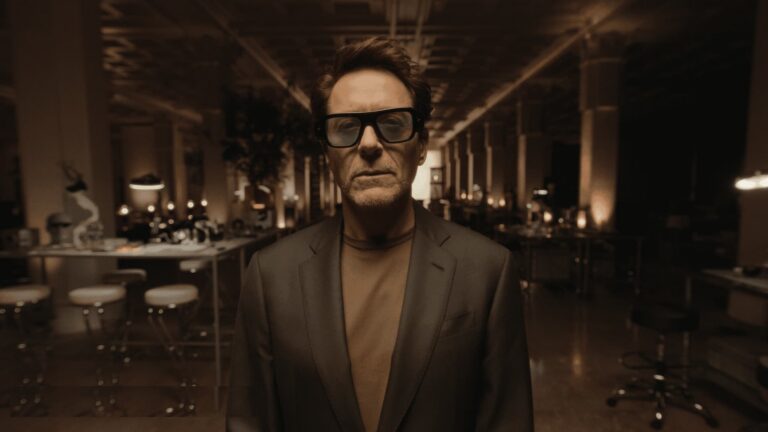
Robert Downey Jr. Joins Snap to Develop Content and Experiences for SPECS AR Glasses. Snap has enlisted Robert Downey Jr. as honorary Chief Customer Experience Officer for its SPECS augmented reality glasses. Announced October 21, the partnership includes developing original content, Lens experiences, hardware collaborations and in-person demonstrations. Downey, whose portrayal of Iron Man introduced millions to fictional AR interfaces, will also appear in promotional videos demonstrating the glasses. Snap expects its first consumer-oriented SPECS to ship this fall, starting at $2,195. The collaboration connects Hollywood celebrity marketing with a new consumer computing platform. Whether Downey’s involvement extends beyond promotion into substantial product development remains to be seen. | Road to VR
Supernatural VR Fitness Returns to Quest Under Independent Ownership. Supernatural, the subscription-based virtual reality fitness application, relaunched in early access on Meta Quest on October 21 following its spin-out from Meta earlier this year. The service is now operated by Supernatural Health, an independent team of 15 employees. Its early-access offering includes thousands of workouts, hundreds of music tracks, a new virtual environment and household accounts accommodating up to four users on one headset. Additional workouts and environments are planned. Supernatural’s return offers a test of whether a dedicated VR fitness company can sustain subscription revenue independently of a major headset manufacturer. | Road to VR
GOLF+ Adds Tiger Woods Course and Plans Standalone Mixed Reality Putting App. GOLF+ has added Payne’s Valley, the first public golf course designed by Tiger Woods, to its VR golf simulator on Meta Quest. The $11.99 course is the first of five planned additions from Missouri’s Big Cedar Lodge. The company also announced that its mixed reality Immersive Putting mode will become a separate application in early November. Players use a real putter and ball on a virtual green projected onto their physical floor. Existing GOLF+ Pass subscriptions, statistics and handicaps will carry over. The standalone app separates mixed reality practice from the full VR golf experience. | UploadVR
The AI Desk
Anthropic Introduces Claude Duet, a Proactive AI Agent That Works Independently. Anthropic introduced Claude Duet on October 21, joining the competition to develop assistants that initiate work rather than simply respond to prompts. The standalone application connects to users’ accounts, identifies tasks requiring attention, and can complete assignments using a cloud computer. Anthropic says the system requests approval before consequential actions, including sending messages or making purchases. Duet is initially available through a waitlisted research preview for U.S. Pro and Max subscribers. The announcement reflects the industry’s growing emphasis on persistent agents that work across applications, challenging conventional ideas about the relationship between users, software, and digital assistants. | Anthropic
Former OpenAI Engineer Accused of Planting Recording Device Had Saudi Connections. Federal prosecutors allege that former OpenAI engineer Abdulrahman Alfozan secretly installed an encrypted recording device in an executive conference room at the company’s San Francisco headquarters. Arrested October 9, Alfozan had booked a one-way flight to Saudi Arabia three days later. Court filings reported October 19 describe contacts with a Saudi royal and travel assistance from a Saudi military official. Investigators also allege that Alfozan used AI tools to research recording equipment. He remains in custody following a detention hearing. His attorney disputes the government’s characterization of his travel plans. The accusations have not been proven in court. | CBS News
Meta’s $145 Billion AI Spending Plan Raises Questions About Investment Returns. Meta’s massive AI infrastructure investment is drawing renewed scrutiny following its third-quarter earnings announcement. The company raised the lower end of its 2026 capital expenditure forecast to $135 billion, retaining an upper estimate of $145 billion. It also reported negative quarterly free cash flow of $2.12 billion, its first deficit since 2012. Meta shares fell as investors weighed rising data center costs against future AI revenue. The company is also planning a new class of nonvoting shares. Its spending illustrates the increasing financial pressure on technology companies racing to build the computing infrastructure needed for advanced AI. Amidst this news, the company announced a 10-for-one stock split. | Reuters
OpenAI, Anthropic and Nvidia Increase Washington Lobbying Spending to Record Levels. OpenAI, Anthropic and Nvidia reported record quarterly federal lobbying expenditures, according to disclosures covering July through September 2026. Nvidia spent approximately $2.2 million, Anthropic $2.1 million, and OpenAI $1.5 million on in-house lobbying. The companies are seeking influence over federal policies involving AI safety, cybersecurity, export controls, intellectual property and regulatory oversight. Although their expenditures remain relatively modest compared with those of established technology giants, their growing presence in Washington reflects the importance of government policy to the industry’s development. AI companies increasingly compete not only for talent, capital and customers, but also over the rules governing their businesses. | The Verge
Disney Agrees to Hire Most of Character.AI’s Workforce Following Bankruptcy. Disney has agreed to offer jobs to at least 60 employees of Character.AI, representing a majority of the bankrupt chatbot company’s workforce. The agreement, disclosed in bankruptcy court filings, includes approximately $60 million in annual compensation and a proposed $20 million acquisition of selected assets. Character.AI’s former CEO, Karandeep Anand, recently became Disney’s first chief technology officer. The startup attracted a large audience but struggled with operating costs, litigation and regulatory scrutiny over chatbot safety. The agreement remains subject to competing bids. Disney’s recruitment of Character.AI talent suggests a growing commitment to conversational AI within its entertainment businesses. | TechCrunch
Cinematic Corner
New AI Cinema Catalog Documents 149 Films as Distribution Remains a Challenge. Cinema Marketplace published a snapshot of its AI filmmaking catalog on October 21, documenting 149 films from 134 credited creators or teams. Of those, 130 have official playable releases. The median runtime is seven minutes and 39 seconds, reflecting the dominance of short-form work in the catalog. Science fiction accounts for 52 titles, making it the largest single genre. The organization cautions that its collection is not a comprehensive industry census. Nevertheless, the report provides useful evidence of a developing creative ecosystem in which attribution, rights documentation, distribution and audience discovery remain important challenges alongside production technology. | Cinema Marketplace
Viggle Launches JST-2, Generating 3D Worlds, Characters and Motion With AI. Move over World Labs. Viggle released JST-2 on October 19, a generative AI model that creates explorable 3D environments, animation-ready characters and full-body motion from text, images or video. Unlike conventional AI video generators, JST-2 produces spatial representations that users can navigate and manipulate. Its motion capture capabilities convert ordinary video into skeletal animation without specialized equipment. Outputs can be exported to Blender, Unity and Unreal Engine. Available through Viggle’s PINOC platform, the model offers free trials and paid commercial plans. Limitations include static environments and rule-based rather than learned physics. The technology targets game development, animation and virtual production workflows. | TechPilot
Five Minutes of Spring, an AI-generated short film, follows eleven-year-old Mara as she rewrites the heroic ending of the Greek myth of Iphigenia on the last afternoon of her world. A top-three finalist for Best Concept at the 2026 Astana AI Film Festival, the film marks its creator’s return to character-driven storytelling after several months experimenting with other formats. Produced with support from Runway’s Creative Partners Program, the film was made entirely with Seedance 2.5, continuing the filmmaker’s exploration of the possibilities and limitations of AI cinema.
Infinity Festival Returns to Los Angeles November 12–15. Infinity Festival returns November 12–15 at Los Angeles’s Audrey Irmas Pavilion, with additional venues to be announced. Presented by HP, Nvidia and Intel, the event combines panels, screenings, exhibitions and networking across entertainment and technology. This year’s programming includes AI, gaming, animation, sports technology and immersive production, with AI and media tracks curated in association with USC’s Entertainment Technology Center. The festival will also host the ASIFA Showcase premiere, Monolith Awards and a Student Lab featuring demonstrations of games and immersive experiences. An exhibition floor and startup presentations round out the program. Registration is open through the festival’s official website. Infinity Festival
Spatial Audio
This column has a companion, the AI/XR Podcast, hosted by its author, Charlie Fink; Ted Schilowitz, former studio executive and futurist for Paramount and Fox; and Rony Abovitz, founder of Magic Leap and Synthbee AI.
Our guest this week is Angela Yu, CEO of vertical streaming app Storeel. Episodes drop on Fridays, and you can find them on podcasting platforms Spotify, iTunes, and YouTube.
Charlie Fink
AR Insider Contributor