
 by
by 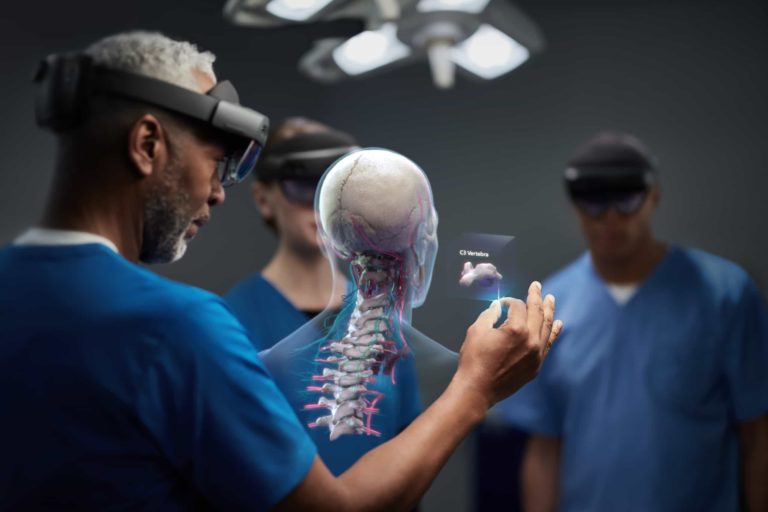
Like many analyst firms, market sizing is one of the ongoing practices of AR Insider’s research arm, ARtillery Intelligence. A few times per year, it goes into isolation and buries itself deep in financial modeling. One such exercise zeroes in on headworn AR revenues.
This is one of the main subdivisions of spatial computing – others include mobile AR and VR. They’re all related and share technological underpinnings, but are driven by separate market forces such as their respective hardware bases (see methodology and inclusions).
So what did the headworn AR forecast uncover? At a high level, global headworn AR revenue is projected to grow from $2.61 billion in 2024 to $14.02 billion in 2029, a 39.96 percent CAGR. This sum consists of consumer and enterprise spending and their revenue subsegments.
Drilling down, our latest Behind the Numbers installment looks at the enterprise portion of the above figures. How are AR glasses expected to sell among enterprises? Beyond hardware, what about the software and apps that support enterprise productivity and visual guidance?
Common Pattern
Jumping right in, enterprise AR spending will grow from $1.18 billion in 2024 to $3.96 billion in 2029, a 27.3 percent CAGR. This growth is driven by advancements in AR glasses, cultural acclimation, and a steady transition from mobile AR (see separate forecast) to headworn AR.
This spending includes AR hardware and software that enables line-of-sight or live-guided support for assembly, maintenance, or tech support. It also includes software that helps enterprises (or software vendors that serve them) author AR experiences that fit the same description.
Enterprise AR’s growth potential stems from its broad applicability. It can include everything from assembly to heavy-equipment maintenance to IT support. It also includes white-collar functions such as AR-guided design and collaboration in architectural or automotive workflows.
These functions cut across several industries and verticals, causing a sizeable addressable market. AR visual guidance is fairly versatile in terms of offering a strong business case in a variety of contexts. But despite that clear-cut ROI case, it still faces challenges.
2026 Predictions: Next Year Sets the Table for AR’s 2027 Inflection
Situational Awareness
Sticking with that last point, growth in enterprise AR productivity & guidance has been mitigated to some degree by typical tech-adoption barriers and organizational inertia. For example, though the C-suite loves the productivity gains, AR can fail to gain traction among front-line workers.
There are several reasons for that, including fear of new technology and its touted efficiency gains that can be perceived as a threat to job security. This is why the most effective enterprise AR programs seek to appeal to all stakeholders… not just the C-suite (see our case studies).
Lastly, back to high-value verticals where AR is taking root, military use shows ample potential. These AR deployments support situational awareness for soldiers in the field, using line-of-sight guidance and battlefield intelligence. It’s all about having more intel than the enemy.
Most spending so far has come from the U.S. Army’s Integrated Visual Augmentation System (IVAS). The program has endured ups and downs with congressional spending approvals and its suppliers. Erstwhile contracted to Microsoft, Anduril won the IVAS contract in early 2025.
We’ll pause there and circle back in the next Behind the Numbers installment with more numbers & narratives. Meanwhile, check out the full report.