
Welcome back to our weekly roundup of happenings from XR and AI realms. Let’s dive in…
Meta’s CTO Andrew Bosworth publicly pushed back against narratives that VR is “dead” at the company. Responding to speculation fueled by reports of major budget shifts within Reality Labs, Bosworth acknowledged Meta is reallocating some investment from metaverse-centric VR toward AI glasses and wearables, but insisted this doesn’t signal abandonment of VR. In an Instagram Q&A, he said “VR is not dead” and emphasized Meta’s ability to invest in multiple technologies concurrently. The remarks come amid broader strategic adjustments, including pausing third-party Horizon OS headsets and shifting focus toward first-party hardware and AI-wearable momentum.
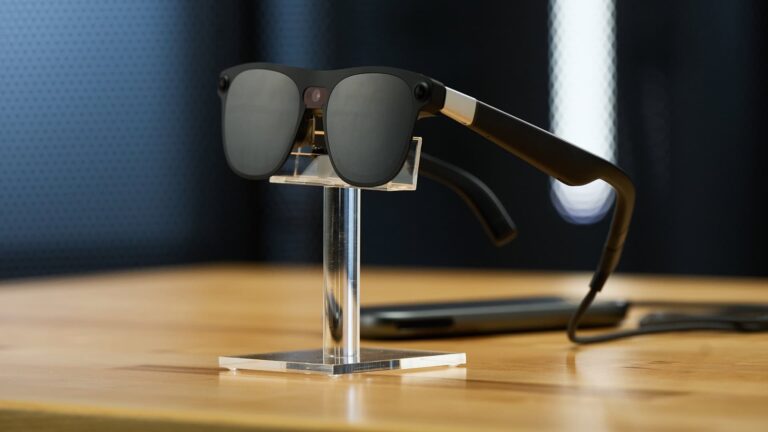
Google and Xreal revealed the first real images and a brief clip of Project Aura, a new pair of Android XR smart glasses set for a 2026 launch. The device resembles sunglasses with a 70-degree field of view and uses a tethered compute puck running Android XR, the same platform behind Samsung’s Galaxy XR. Built-in head and hand tracking were shown, and many apps available on Galaxy XR will run on Aura’s system. The reveal confirms Aura remains on track despite other Android XR partner setbacks.
Skarred Ghost Product Review. TCL RayNeo X3 Pro AR smart glasses deliver some of the most advanced wearable AR tech available in 2025. The see-through display features full-color dual MicroLED displays up to 6,000 nits brightness, a lightweight design (~76 g), and AI-powered capabilities like real-time translation and heads-up navigation. The Skarred Ghost (Tony Vittillo) praised the tech and comfort compared with earlier models but criticized the short battery life, limited app ecosystem, and conspicuous aesthetics that make them feel prototype-like.
TikTok reached an agreement with U.S. investors to create a new American joint venture, resolving a years-long standoff. Oracle, Silver Lake, and Abu Dhabi-based MGX will collectively own 45 percent of the U.S. entity, with the deal expected to close on January 22. ByteDance has agreed to the terms, though additional work remains. The transaction meets requirements under the federal sale or ban law, just ahead of a January 23 deadline. The U.S. business is worth about $14 billion. The deal ends a prolonged bidding process involving multiple tech and media players.
For more spatial commentary & insights, check out the AI/XR Podcast, hosted by the author of this column, Charlie Fink, and Ted Schilowitz, former studio executive and futurist for Paramount and Fox, and Rony Abovitz, founder of Magic Leap. This week, our guest is Kaitlin Krause, author of Digital Wellbeing. You can find it on podcasting platforms Spotify, iTunes, and YouTube.
 Charlie Fink is an author and futurist focused on spatial computing. See his books here. Spatial Beats contains insights and inputs from Fink’s collaborators, including Paramount Pictures futurist Ted Shilowitz.