

CES 2026 closed as one of the largest editions of the show in recent years. The Consumer Technology Association reported more than 4,100 exhibiting companies, roughly 148,000 attendees, and close to 7,000 members of the global media in Las Vegas. CTA also cited more than 3,000 CES Innovation Award entries across consumer, enterprise, health, mobility, sustainability, and emerging technology categories. This is why I say CES should stand for the “Consumer Everything Show.” International participation exceeded 40 percent of total attendance, with particularly strong representation from Asia. I would characterize it as the first show where China, not Japan and Korea, dominated the show, significantly overshadowing American manufacturers.
As I point out every year, the largest companies, Google, Microsoft, Apple and Meta are not present in a meaningful way because they all have their own invitation-only developer conferences later in the year. While Nvidia had a massive presence at the Fontainebleau hotel next door to the convention center, the other tech hyperscalers were absent, save for private meetings in adjacent hotel suites. Nonetheless, CES continued to point to major trends in the consumer electronics industry that will be coming to consumers this year.
In a post-show conversation with Dean Takahashi of GamesBeat, “the dean of tech writers,” and former Fox and Paramount technology executive and entrepreneur Ted Schilowitz, on the AIXR podcast, both noted major differences in this year’s show. “This was a year of dramatic change,” said Schilowitz. “Sony didn’t have their traditional offerings at the booth. They were showing their electric car, Affela, a joint venture with Honda. They didn’t show their televisions at all. I just wonder if these corporations are studying the return on investment of these very large CES expenditures and realizing there is no real ROI anymore to a giant booth showing washing machines and TVs.”
Artificial intelligence appeared across nearly every major product category at the show. Televisions, appliances, wearables, vehicles, robots, and infrastructure systems relied on on-device or hybrid AI models for perception, control, and adaptation. “We’re still in the middle of this AI product explosion,” said Takahashi. “It’s not imploding or slowing down yet. Everyone is throwing products at the wall to see what sticks.”
Compute underpinned many of those demonstrations. Nvidia maintained a visible presence through platform announcements and partner integrations, and its hardware and software stacks were referenced throughout robotics, vision, autonomy, and simulation demos. Nvidia emphasized “physical AI,” with systems designed to perceive and act in real-world environments rather than remain confined to screens. “Nvidia took over the Fountainbleu, an entire brand new resort hotel next to the North Hall of the Convention Center. It felt very much like chest beating,” said Schilowitz. “They were saying, ‘Look at us, we’re the biggest company in the world.’ At the end of the day, you’re looking at server racks and machines and thinking, you don’t actually need to see what computers look like to understand how powerful they are.”
Robotics represented one of the most expansive categories on the floor. Full-scale humanoid robots demonstrated balance, dexterous manipulation, and coordinated movement intended for logistics, manufacturing, and service roles. Companies highlighted advances in sensing, teleoperation, and safety, with systems increasingly designed to operate in proximity to people. There was heavy crowd interest around humanoid demonstrations, reflecting continued momentum in industrial robotics. “Digital twins, computer vision, and world models are why robots are arriving so fast and in such large numbers,” Takahashi observed.
Alongside industrial systems, consumer robotics were also prominent. Many products combined cameras, microphones, expressive displays, and mobile bases, reflecting convergence between computer vision and large language models. The prevalence of AI companion robots and robotic pets aimed at families, children, and older adults was notable. These devices emphasized interaction, responsiveness, and routine engagement rather than task execution.
Pet tech expanded well beyond automated feeders and GPS trackers. Several exhibitors showed AI-enabled pet companions, health monitoring collars, and interactive toys that adapt behavior based on activity and mood. These products are part of a broader trend toward continuous sensing and behavioral modeling in the home. Most will never see the light of day.
Age tech and assistive technologies also occupied a larger footprint. Products targeted mobility support, fall detection, medication management, and social engagement for older adults. Health-focused wearables monitored movement, sleep, and physiological signals, while AI systems flagged changes over time. Devices aimed at supporting aging in place through unobtrusive monitoring rather than clinical intervention were out in force.
Health and wellness technologies extended into sleep tech, massage devices, and recovery systems. Sleep products tracked neural, respiratory, and movement data to adjust sound, temperature, or lighting. Massage and physical therapy devices used AI to adapt pressure and movement based on body position and muscle response. Coverage emphasized consumer interest in non-clinical health optimization tools for an aging population.
Wearables remained one of the densest categories at CES 2026. Devices logged audio, motion, light exposure, and biometric data continuously. Many emphasized long-term pattern recognition rather than momentary metrics. Business Insider and Investors.com reported on wearable AI devices designed to record activity and conversations for later summarization, raising questions about privacy and data handling alongside functionality. “Every single smart glasses demo was worse than the next. They look great, and then the excuses begin when you ask to see functionality,” said Schilowitz. At the same time, new devices for low vision and autofocus suggest much greater functionality is on its way.
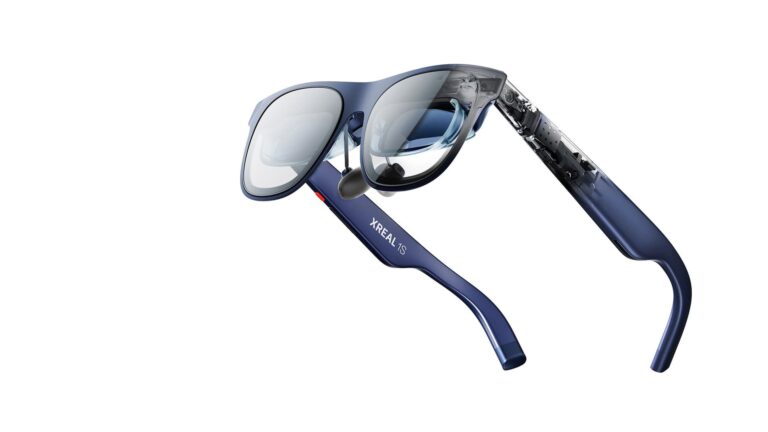
XR and smart glasses formed a highly visible cluster across multiple halls. Vendors focused on lightweight form factors, comfort, and private viewing for productivity and entertainment. Demos emphasized screen quality, pairing speed, battery life, and text readability. Following the breakout success of Meta’s Ray-Ban AI glasses, the XR category has decidedly shifted to everyday personal use cases rather than immersive headsets focused on simulation and games. AI-supported translation, note-taking, content discovery, and interface adaptation were the key functionalities of these devices.
Television and display technology continued to push toward thinner, brighter, and more power-efficient screens. Ultra-thin OLED and Mini-LED televisions featured AI-driven image optimization running locally on the device. TCL is the lead partner for Google TV, and they demonstrated in a presser how it can augment the viewing experience. There were increasingly narrow bezels, wall-flush mounting, and adaptive brightness systems designed for varied lighting conditions. AI integration focused on content discovery, voice control, and automatic calibration. Of course, a 163-inch screen from TCL, with unheard-of pixel density and movie theater quality, is over $100,000 today. We may see the same product at a quarter of the price in two years or sooner.
Food tech extended beyond kitchens into supply and preparation. Smart appliances, ingredient recognition systems, and nutrition tracking platforms appeared alongside alternative protein and packaging innovations. It’s an incremental improvement rather than a disruptive change, despite the integration of AI-guided recipes and refrigerators that track their content.
Home appliances adopted similar architectures. Smart kitchens featured AI cooking systems capable of identifying ingredients and controlling temperature once food was loaded. Refrigerators, washers, dryers, and air conditioners adjusted their operation based on usage patterns and energy availability.
Energy and solar technologies occupied a growing share of the show. Exhibitors presented integrated systems combining solar generation, battery storage, and AI-driven energy management. These platforms optimized household energy usage based on pricing, availability, and demand.
Outdoor and lawn tech gained visibility. Autonomous robotic mowers using LiDAR and 3D mapping operate without perimeter wires, treating yard maintenance as a navigation problem. Garden tech included AI-assisted irrigation systems and plant monitoring tools that adjusted watering based on soil and weather data.
Mobility and “hover tech” appeared through compact drones and personal flight concepts. While regulatory constraints shaped many demonstrations, flying cameras emphasizing autonomous stabilization and hands-free capture drew attention. The drone category seemed smaller this year, which surprised me, given the militarization of consumer FPV drones.
CES Dispatch, Part 2: AI Everywhere, from Sublime to Strange
Sports tech ranged from performance tracking wearables to AI-assisted training systems with computer vision and AI-powered robotic tennis and golf instructors. Products monitored biomechanics, reaction time, and recovery, feeding data into coaching platforms. Shoe tech incorporated sensors to analyze gait and pressure distribution, while apparel integrated haptic feedback and thermal regulation.
Kid and toy tech remained a staple of CES. AI-enabled toys incorporated speech recognition, vision, and adaptive behavior. Many products targeted learning and engagement through interactive storytelling and problem-solving. Educational technology extended these ideas into classrooms, with AI-driven tutoring systems, language learning tools, and classroom management platforms featured prominently.
Hair tech and beauty devices applied AI to personalization. Smart styling tools adjusted heat and movement based on hair type and condition. Skin analysis systems used imaging and machine learning to recommend products and routines. Coverage from lifestyle outlets emphasized customization as a differentiator.
Sex tech continued to appear at CES under health and wellness umbrellas. Products focused on safety, consent, and physiological feedback, often integrating biometric sensing and app-based control. Reporting treated the category as part of broader conversations about intimate health and consumer wellness technology, but honestly, it’s still a bunch of men starting ridiculous fake women and sex simulation.
Media and entertainment economics surfaced through platform announcements and interviews. Roku drew attention for its comments around low-cost streaming and AI-assisted content production, with Variety reporting on ambitions to reduce production costs through automation. Across the industry, AI tools embedded in editing, localization, and personalization workflows continued to reshape content pipelines.
China’s presence at CES 2026 was widely noted across press coverage. Chinese companies exhibited across displays, appliances, robotics, energy systems, and XR hardware. Many showcased products are already shipping or nearing commercial availability. Most robotics came from China. “My question to every robotics company was how much does it cost,” said Schilowitz. “No one would answer the question.”
Across categories, CES 2026 presented a technology landscape defined by AI and automation. XR glasses appeared as everyday displays. Robotics spanned industrial and domestic contexts. Health, home, energy, and mobility technologies adopted similar sensing and adaptation frameworks. The show functioned as a large-scale comparison environment, where repetition across categories made patterns visible without relying on single breakthrough moments.
 Charlie Fink is the author of the AR-enabled books “Metaverse,” (2017) and “Convergence” (2019). In the early 90s, Fink was EVP & COO of VR pioneer Virtual World Entertainment. He teaches at Chapman University in Orange, CA.