
 by
by 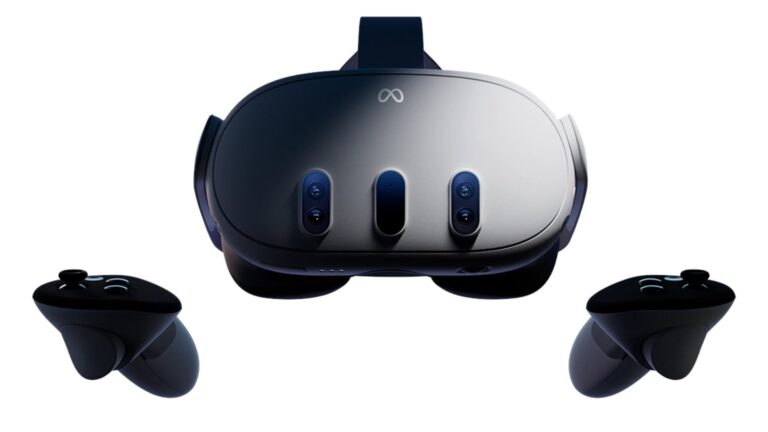
Like many analyst firms, market sizing is one of the ongoing practices of AR Insider’s research arm, ARtillery Intelligence. A few times per year, it goes into isolation and buries itself deep in financial modeling. One such exercise zeroes in on VR revenues.
This is one of the subdivisions of spatial computing – others include mobile AR and headworn AR. They’re all related and share technological underpinnings, but are driven by separate market forces such as their respective hardware bases (see methodology and inclusions).
So what did the VR forecast uncover? At a high level, Global VR revenue is projected to grow from $12.2 billion in 2024 to $18.9 billion in 2029, a 9.12 percent compound annual growth rate. This sum consists of consumer and enterprise spending and their revenue subsegments.
Drilling down, our latest Behind the Numbers installment breaks down those figures and factors. What’s driving VR revenue generation today and going forward? What players are best positioned to gain market share? And what are the positioning strategies they’re applying?
Business Case
Starting at the top. Global VR revenue is projected to grow from $12.2 billion in 2024 to $18.9 billion in 2029, as noted. This leads other XR sectors, such as mobile and headworn AR. Though VR continues to face market challenges, it’s the most established of these XR subsegments.
Segmenting the above VR estimates, revenue is bisected by consumer and enterprise markets. Though consumer spending had an early lead – inheriting some demand and market dynamics from the robust gaming industry – enterprise spending has pulled ahead in revenue share.
That growth in enterprise VR is mostly due to the medium’s capacity for immersive training, which demonstrates favorable efficacy and efficiency. Starting with the former, VR has demonstrated visceral and experiential qualities that elevate muscle memory and informational recall.
As for efficiency, VR simulations drive cost reductions versus physical training methodologies. That includes sidestepping the need for equipment usage and travel costs to physically interact with training pros and settings. This advantage resonates most with the C-suite.
Accordingly, companies ranging from Coca-Cola to Walmart to Bank of America have invested in large-scale VR training programs. They’ve validated meaningful savings and greater effectiveness – a strong business case for adoptive enterprises that will only grow in number.
Historical Pattern
Beyond consumer and enterprise segmentations, VR revenue can be bisected by hardware and software. And for several years, including past installments of this annual forecast, hardware had a greater revenue share, as is often the case when new tech sectors emerge.
But once a hardware installed base is established, software accelerates and eventually eclipses hardware spend. That happens as software builds on that larger installed base of hardware, and enjoys recurring revenue cycles that outpace hardware replacement cycles.
This historical pattern is precisely what we’ve seen in VR. And we are now at the stage when software revenue has eclipsed hardware. This is lifted by consumer in-app purchases (B2C), device management programs (B2B), and LBVR content/game licensing (B2B2C).
But it’s not all good news. Market signals over the past year haven’t been strong for consumer VR. This is partly due to market saturation for leading hardware like Quest 3 and 3s; and demand shifts to emerging XR device classes such as screen-mirroring display glasses.
These devices from the likes of VITURE and Xreal offer large private screens for 2D entertainment. Though VR can accomplish more dimensional experiences, these 2D experiences account for a meaningful share of VR usage. And they’re now offered in a sleeker form factor.
We’ll pause there and circle back in the next Behind the Numbers installment with more numbers & narratives. Meanwhile, check out the full report.