
 by
by 
Welcome back to our weekly roundup of happenings from XR and AI realms. Let’s dive in…
The Lede
Anthropic has overtaken OpenAI in quarterly revenue for the first time, reporting $11.6 billion in Q2, more than double the previous quarter, compared with OpenAI’s $6.7 billion. OpenAI’s losses widened to $12.3 billion despite ChatGPT surpassing one billion active users, while Anthropic has benefited from strong demand for Claude Code. The companies have also reversed their perceived positions on safety. OpenAI paused some training of its unreleased Astra models, with Sam Altman emphasizing safety over momentum, while Anthropic said its risk assessment found no reason to slow training. Both companies reported AI-related cybersecurity incidents this summer.
Feeling Spatial
Snap Says Mass Adoption Of AR Glasses May Take Until 2030. Snap CEO Evan Spiegel told investors that the company does not expect mainstream consumer adoption of its Specs augmented-reality glasses until toward the end of the decade. Specs are scheduled to launch September 16 for $2,195, with Snap initially targeting developers, early adopters and consumers willing to try the hardware firsthand. Spiegel said both weight and price will need to decline before unit sales increase substantially. Snap has spent more than a decade developing Spectacles hardware and software and is positioning the new Specs as see-through AR computers incorporating AI and hands-free interaction.
KitBash Acquires ArtStation And Sketchfab From Epic Games. KitBash has acquired ArtStation and Sketchfab, adding the two creator platforms to a company that already operates KitBash3D and Greyscalegorilla. Epic Games had owned both ArtStation and Sketchfab. KitBash said there are no immediate changes to how either service operates. Existing portfolios, libraries, logins and core workflows will continue, as will ArtStation’s digital and print marketplaces and jobs service. ArtStation also said creators will retain ownership of their work. Epic Games said it plans to continue working with KitBash following the transaction. Financial terms of the acquisition were undisclosed.
Follow the Money
Higgsfield Raises $400M At $5.4B Valuation. AI video and image platform Higgsfield raised a $400 million Series B at a $5.4 billion valuation, more than quadrupling its $1.3 billion valuation from eight months ago. DST Global led the round, with participation from Goldman Sachs Alternatives, Tribe Capital, Valor Capital and others. Higgsfield says annualized revenue has reached $700 million, with more than 30 million users and customers at 390 Fortune 500 companies. The company, founded in 2023 by former Snap AI founder Alex Mashrabov, plans to use the funding for hiring, product development, global infrastructure and additional computing capacity.
Nvidia And Wall Street Want To Make Compute An Asset Class. Nvidia is working with Apollo, BlackRock, Blackstone, Brookfield, Goldman Sachs and KKR on plans involving $500 billion in financing intended to establish computing infrastructure as an investable asset class. Nvidia CEO Jensen Huang told CNBC that GPUs and computing systems can be treated as revenue-producing assets because they can be leased or deployed to generate income. The effort comes as financing for AI data centers and GPU purchases expands rapidly. Nvidia has also participated in financing arrangements involving customers and infrastructure providers that purchase its processors, as demand for computing capacity continues to require large capital expenditures.
The AI Desk
Anthropic CEO Dario Amodei Calls AI Backlash A “Crisis Of Trust.” Anthropic CEO Dario Amodei responded to criticism that his warnings about artificial intelligence risks have contributed to growing public opposition to AI. Investor Gavin Baker had argued Amodei should become a more positive industry advocate. Amodei said public skepticism was not primarily caused by warnings from AI executives, calling it a broader crisis of trust in companies, government and the technology industry. He acknowledged that AI companies, including Anthropic, have not yet delivered many of the benefits they have promised. Anthropic has supported some AI regulation, including transparency requirements for large developers.
Tech Platforms Crack Down On “AI Slop.” Spotify, LinkedIn, YouTube and other technology platforms are introducing measures to reduce low-quality, mass-produced AI content. Spotify has removed tens of millions of spam tracks and plans additional labeling for AI-generated music. LinkedIn has introduced systems designed to reduce distribution of generic AI-generated posts and allows users to report content as “AI slop.” YouTube has clarified monetization rules for repetitive, template-based and mass-produced material, including content generated with AI. The changes come as generative tools make it possible to produce music, video, articles, social posts and other digital material in large volumes at low cost. On the other hand, Meta and X are doing basically nothing. You need a magnifying glass to find their AI labels.
Meta AI Comes To The Mac. Meta launched a standalone Meta AI app for Mac, currently in beta and free with a Meta account. The app includes system-wide dictation and lets users share an application window with Meta AI, which can answer questions or generate content based on what is displayed. Meta is also adding business integrations that connect the assistant with Facebook and Instagram accounts, Meta advertising campaigns and Google Workspace. Businesses can use Meta AI to analyze social-media and advertising performance, compare results with similar brands, and create documents, spreadsheets and presentations. Meta has not announced a Windows version.
Cinematic Corner
Hollywood And ByteDance Reach AI Copyright Agreement. The Motion Picture Association and ByteDance signed an agreement to strengthen copyright safeguards around ByteDance’s Seedance video and Seedream image-generation models. The agreement covers models available through TikTok, CapCut, Dreamina and other ByteDance services. It follows a February cease-and-desist letter from the MPA alleging that Seedance 2.0 could generate copyrighted film and television characters without authorization. Disney, Warner Bros., Paramount, Netflix and Sony had also raised objections. ByteDance says newer versions contain stronger intellectual-property protections. The company and the MPA agreed to continue working together on safeguards as the models develop.
AI Filmmaking Moves Onto The Set. The Guardian visited Promise Studios during production of its AI-assisted horror film Touch Grass, which has a budget in the low millions. Actor Tori Thomas was filmed against a simple background while Seedance 2.5 generated environments that appeared on the director’s monitor during production. Promise CEO George Strompolos estimates hybrid productions combining actors with generative AI could cost 20% to 50% less than conventional filmmaking. The Guardian also reports Netflix used AI on 300 of roughly 1,000 titles in 2026. Ron Howard is working with AI studio Obsidian on an animated documentary about Vietnam prisoners of war.
Rogue Studios Launches An R-Rated AI Video Platform. Rogue Studios has launched an AI-generation platform focused on adult-oriented cinematic content. Its proprietary Rogue 1.0 model produces uncensored images and video, while the platform also provides access to mainstream models including Seedance and Kling. Subscription plans are $29 to $299. Rogue says user-generated images and videos are not used to train its models. Its terms prohibit nonconsensual deepfakes, child sexual abuse material, unauthorized depictions of public figures and other illegal imagery. The company says it is targeting filmmakers and creators who want to produce mature material that is restricted by many mainstream generative-AI services.
Brands Build Their Own Hollywood Studios. Major consumer brands are expanding into entertainment production as traditional film and television output declines. Gap hired former Paramount executive Pam Kaufman as chief entertainment officer, while Procter & Gamble, Starbucks, Kraft Heinz, Dick’s Sporting Goods and e.l.f. operate or are building entertainment divisions. Toyota created the talk show Pit Stop Tonight for its YouTube and social channels; Prada hired Barry Jenkins to direct a fashion short; and Lavazza produced a digital series starring Martin and Francesca Scorsese. Sources told The Hollywood Reporter branded-entertainment budgets range from tens of thousands of dollars to over $50 million for major projects.
Generative Gems
After years of war, Elijah Kelly returns home to Mill Ford. However, he finds something far worse than what he left behind. The town is not empty. It is waiting. Directed by Mike J. Mitch for PhantomX.ai. There are six episodes posted on YT.
Imagine if Steve Jobs woke up in 2026, what might it be like to walk around and see everyone out in public absorbed in their devices, disconnected from real life and each other, what would Steve think about it all from his perspective. “This is why AI filmmaking is such a powerful medium, to explore an idea that would be impossible to create before,” says filmmaker Andy Oleck, aka genmagnetic, on his YT.
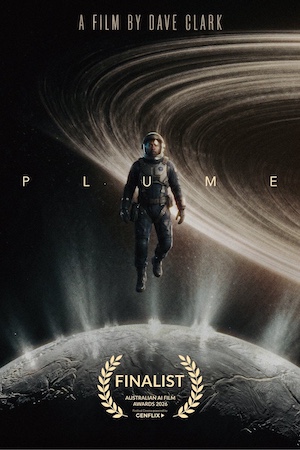
“Plume,” a short film by Promise AI Studio’s Chief Creative Officer Dave Clark, explores the loneliness of an astronaut in deep space who encounters an alien being. My longest fully GenAI short film to date. “I’ve been chasing this idea for years, and for the first time, I finally had the tools to tell it the way I imagined,” Clark said on X.. PLUME has been named a finalist for the Best International Short AI Film at The Australian AI Film Awards.
Spatial Audio
This column has a companion, the AI/XR Podcast, hosted by its author, Charlie Fink; Ted Schilowitz, former studio executive and futurist for Paramount and Fox; and Rony Abovitz, founder of Magic Leap and Synthbee AI.
Last week’s guest was Mark Greget, founder and CEO, NuEyes (see video below). Our guest this week is Barmak Heshmat, founder and CEO of Breyleon. We can be found on Spotify, iTunes, and YouTube.
Episodes drop on Fridays, and you can find them on podcasting platforms Spotify, iTunes, and YouTube.

Charlie Fink
AR Insider Contributor