
 by
Welcome back to our weekly roundup of happenings from XR and AI realms. Let’s dive in…
The Lede
Jensen Huang is out as Nvida Chair and CEO. Oh the memes! The shame! The public humiliation! The celebrity CEO’s trademark leather jacket should go the Smithsonian Institution, like a famous costume, or sports uniform. The girls, or, ahem, women, the stage appearances, the non-stop TV appearances, the Air Force One travel, will all be things of the past as Jensen adapts to being a regular billionaire. While all this was going on, somehow millions of dollars worth of Nvidia Blackwell chips illegally slipped into China and provided the training for the country’s leading AI models. Not a good look while carrying on an affair with a woman identified by the CIA as a Chinese spy. The bigger and more dangerous scandal may be the orgy of round-trip financing Jensen and the hyperscalers have indulged in. I’ll invest $10B in your company. You buy $10B worth of chips. In response to this I am doing the only thing a sensible person can do. I placed a Kalshi bet on who will play Jensen on Saturday Night Live.
Feeling Spatial
Xreal Aura, the AR display glasses running Google’s Android XR, shipped this week. I have mine right here next to me, although I’ve only had a few minutes to play with them so far. I really like these, and video display glasses generally, but I find I rarely think to use them. I’m waiting for the ones that change all that. Could this be it? The Aura uses an external puck for power and compute. It also has a nice touch pad, which sometimes is easier than hand tracking. Early hands-on coverage of the demos from reviewers like Scott Stein at CNET has been positive. More definitive reviews should start appearing this weekend.
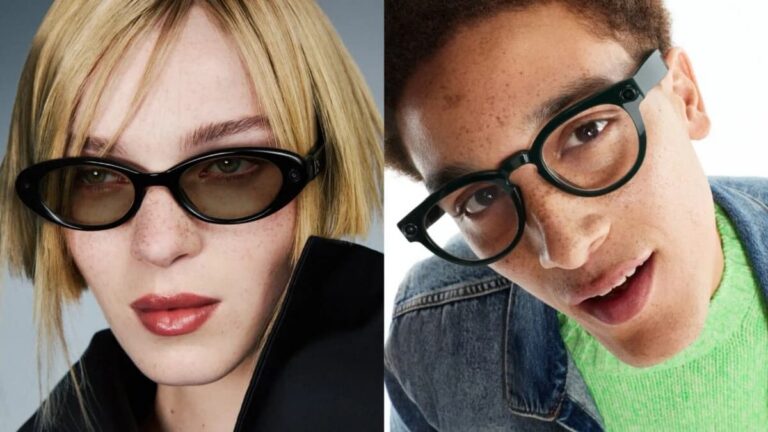
Google Opens Preorders for Its First Android XR ‘Intelligent Eyewear‘. Up until now, Meta’s Ray-Bans and Oakley’s had the market to themselves and shipped over ten million units. Orders opened November 12, with retail availability beginning December 10. Samsung supplies the underlying hardware, with three Warby Parker styles starting at $395 and six Gentle Monster designs starting at $449. These models have camera and audio features but no display in the lenses. Gemini provides voice assistance, including spoken navigation and translation. The glasses support compatible Pixel, Samsung, and iPhone models. Google lists a weight of about 41 grams and claims up to nine hours of battery life. Prescription options are available, depending on the frame.
AWE Spreads Its Wings. The organizers of Augmented World Expo are launching Physical AI World, a companion event sharing AWE’s Long Beach Convention Center venue and June 14–17 dates. The program will cover robotics and autonomous systems, alongside world models and spatial computing. AWE founder Ori Inbar says the two communities are tackling overlapping problems in understanding and acting in three-dimensional space. The events will occupy separate sections of the convention center, with attendees able to experience both. Planned sessions and exhibits include training data, environment reconstruction and teleoperation, plus developer infrastructure and safety.
The AI Desk
United Airlines Closes the Door to AI Agents. United is restricting unauthorized personal AI assistants from accessing its website and app, including through travel agencies and booking aggregators. Announced November 11, the policy covers booking, ticketing, and distribution. The airline says sharing account credentials with agents could expose personal information or trigger unintended purchases and use of MileagePlus miles. It also cites check-in requirements that passengers personally acknowledge restrictions on hazardous items in baggage. United says it will continue evaluating the technology. Bookings made by agents before November 11 will be honored, according to Travel Weekly.
Anthropic’s IPO Reportedly Draws Six Times the Available Demand. Reuters, citing Bloomberg, reported on November 12 that orders for the offering were roughly six times the shares available. Anthropic and selling shareholders seek up to $64.4 billion through 825 million shares priced between $70 and $78. Trading is expected to begin November 19 on Nasdaq under ANT. The proposed terms imply a fully diluted valuation of up to $1.4 trillion. Bankers reportedly told prospective buyers that existing investors would receive priority. Demand and offering terms could change; Anthropic had not commented on the report.
Anthropic’s Claude Fable 5.2 Expands Its Creative Reach. Released November 9, Fable 5.2 can create coded animations and interactive 3D worlds, according to Anthropic. Through Model Context Protocol, or MCP, Claude can also operate connected creative tools. Adobe’s existing connector supports image editing and video resizing through plain-language instructions. More ambitious controls are coming: Adobe previewed connections for Premiere and After Effects that would let outside agents edit sequences and motion graphics directly in project files, preserving editable layers and compositions. Those integrations enter private beta in early 2027. The practical appeal is directing production tasks across applications from a conversation.
Cosm Inks Deal With Disney to Bring Star Wars to Its Dome Chain. Disney and Cosm announced a multiyear, multi-film agreement on November 12, starting with Star Wars: A New Hope in March 2027, the film’s 50th anniversary year. The production uses the 2019 version, with the movie playing at the center of Cosm’s LED dome while surrounding imagery places audiences inside its locations. Disney, Lucasfilm, Industrial Light & Magic, and MakeMake are collaborating on the presentation. Planned environments include Tatooine and the Death Star, with the Millennium Falcon’s trench run extending into the surrounding dome. Other Disney titles have not been named.
Cinematic Corner
Charlie Fink’s Weekly Cinematic AI News, Tips, and Picks can now be found on Substack every week.
Here’s a preview from this week’s roster…
“The Field Agent,” by Zack Murray, follows a scarecrow watching a spy movie at a drive-in before entering its world. The six-minute short won third place and $100,000 at the Higgsfield Global Film Festival. Paolo Gavazza, a Rome-based designer and AI strategy consultant, praised its direction on LinkedIn: “Two distinct visual languages.” He described the countryside’s nocturnal textures and the spy film’s saturated Technicolor. “The transition from one register to another isn’t a special effect—it’s the narrative itself,” he wrote.
Spatial Audio
This column has a companion, the AI/XR Podcast, hosted by its author, Charlie Fink; Ted Schilowitz, former studio executive and futurist for Paramount and Fox; and Rony Abovitz, founder of Magic Leap and Synthbee AI.
Last week’s guest was Karl Guttag, a computing pioneer who designed chips for Texas Instruments before turning his deep well of understanding to XR (see episode below). Sitting in for Ted this week is our friend Mike Boland, editor and publisher of AR Insider. Our guest this week is analyst Anshel Sag, of Moor Insights, one of the world’s leading experts on XR, Spatial Computing, and Wearables.
Episodes drop on Fridays, and you can find them on podcasting platforms Spotify, iTunes, and YouTube.
Charlie Fink
AR Insider Contributor