
 by
by 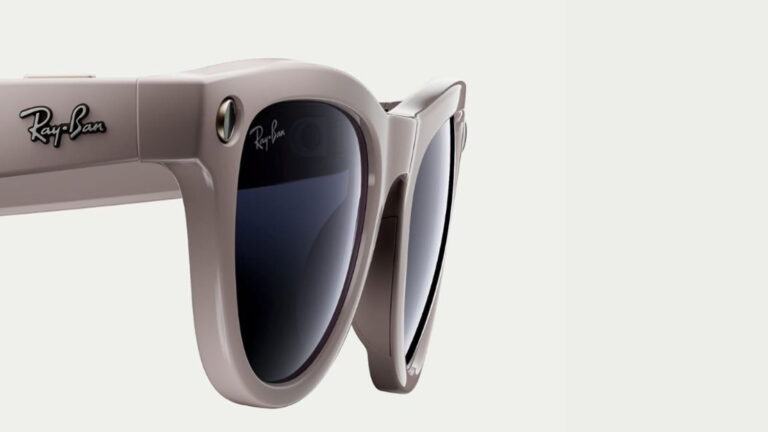
As we roll into 2025, it’s time for our annual ritual of synthesizing the lessons from the past twelve months and formulating the outlook for the next twelve. 2025 was an action-packed year for spatial computing, which continues a gradual uphill ascent toward mainstream traction.
2025 highlights include XR’s ongoing convergence with AI, inflections in non-display AI glasses, the rise of video display glasses, and the unveiling of the long-awaited Meta Ray-Ban Display glasses. Meanwhile, roadmap signals emerged from players ranging from Snap to Apple.
All these approaches – video passthrough AR, optical seethrough AR, and non-display smartglasses – represent form-factor divergence and diversification. That’s a good thing, as XR should include varied formats that are purpose-built and use-case-driven – a key trend in 2025.
Breaking it all down, what were the biggest lessons in 2025? Our research arm ARtillery Intelligence recently tackled this question in its report Spatial Computing: 2025 Lessons, 2026 Outlook. After publishing 2026 predictions here on AR Insider, we shift gears to 2025 lessons.
We’ll break them down weekly, continuing here with #2: Practice the Art of the Possible.
Lesson 1: XR Devices Diverge & Diversify
Lesson 2: Practice the Art of the Possible
Lesson 3: AR’s Future is Ambient & Intelligent
Lesson 4: Communications is the Killer App
Lesson 5: VR < AR… But it Isn’t Dead
The Market Has Spoken
In parallel with the previous 2025 lesson on device divergence, another philosophy is emerging to define XR devices: the art of the possible. Rather than overly-ambitious attempts at futuristic XR, today’s top devices are honest with themselves about what they can and can’t do.
By internalizing the realities and limitations of the underlying technology, and designing around them, these devices are starting to achieve XR’s best version of itself today. This includes a focused set of features, as opposed to the do-everything bulk that defined past XR flagships.
Exemplars of this philosophy include VITURE’s Luma line of video display glasses. They don’t attempt to achieve highly dimensional AR – though that could be in the long-term road map. This lets them reduce bulk, heat, and cost, which today’s consumers want more than full immersion.
This toned-down approach also elevates activities that are already popular with consumers: 2D entertainment and gaming. Rather than trying and failing to spark a UX revolution – as previous XR generations did – they focus on the attainable goal of smaller evolutionary steps.
Another example is Ray-Ban Meta Smartglasses. They took this principle to another level by avoiding visuals altogether. They determined they can be more effective with visual inputs and audible outputs (multimodal AI), as well as high-quality A/V and a line-of-sight media capture.
The result is an elegant UX that’s experientially meaningful, even if graphically underpowered. It does more with less. And regardless of how this sounds on paper, the ultimate validation is the market. And the market has spoken, to the tune of 5 million+ estimated units sold to date.
The Moneyball Approach
To contrast the above examples with the previous generation’s approach, we saw devices such as Magic Leap 1. It was big on ambition and imagination – not necessarily bad things – but didn’t balance in enough pragmatism regarding the underlying technology’s shortcomings.
This resulted in the opposite of the more recently validated “art of the possible” approach. Along with Microsoft HoloLens, Magic Leap 1 was an unfocused device that didn’t achieve AR’s best self today (or at least at the time). Instead, it fell short in attempts to be its best future self.
These comparative outcomes are all in the framing. The goals of a given device, and the tone they set from the beginning, can determine if they’re going to succeed at an attainable end, or fall short of an overly-ambitious one. Of course, it’s easier said than done, but that’s the high-level lesson.
In fairness to Magic Leap et al., there was far less data about market demand at the time. Though it seems obvious now that consumers didn’t want deep levels of immersion in a hefty and expensive wearable, that wasn’t clear in all the excitement of XR’s circa-2017 hype cycle.
To belabor the point with a baseball analogy, XR’s previous generations swung for the fences at every pitch… and struck out. The latest batch has a more disciplined batting style – hitting doubles, getting on base, and scoring ‘small ball’ runs. Call it the Moneyball approach to XR.
We’ll pause there and circle back next week with another 2025 lesson. Meanwhile, see the full report, which includes 2026 predictions.