
 by
by 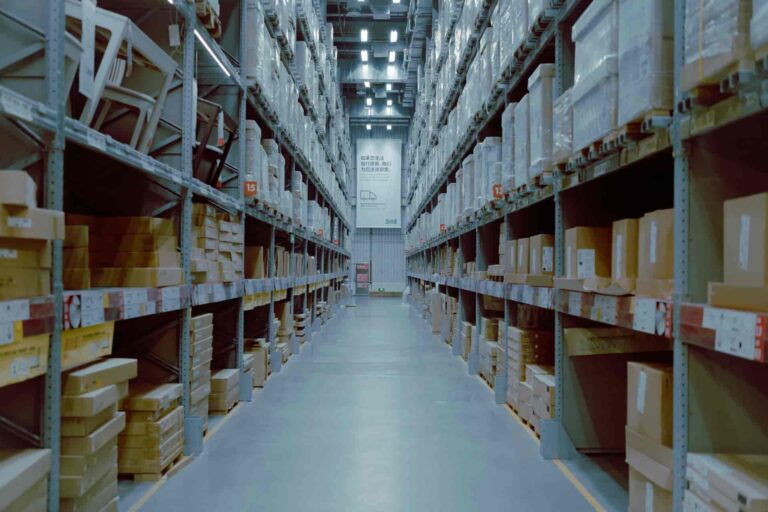

Modern e-commerce is pushing warehouses to the edge. Order volumes keep rising, while delivery windows keep shrinking. Labor shortages only add more pressure. In this high-demand environment, AR has become a key tool. It is changing how warehouse teams see, navigate, and interact with the physical space around them.
Where AR Is Already Winning In Logistics
AR has moved past pilot programs in logistics. In several warehouse workflows, it is already providing measurable gains throughout various areas of the industry.
Vision Picking
Instead of relying on handheld scanners or paper lists, workers use smart glasses that overlay pick paths, item counts, and bin locations directly into their field of view. The result is faster navigation, fewer errors, and less cognitive switching between tools.
DHL, for example, reported productivity improvements of 25% in early AR-based vision-picking deployments. Gains like this enhance both speed and precision. When order volumes are high, even small accuracy improvements compound across thousands of SKUs.
This level of accuracy becomes even more critical in high-stakes environments. In aerospace and defense warehousing, inventory must meet strict documentation, traceability, and handling requirements. Certain components must adhere to strict MIL-SPEC standards, ASTM classifications, or detailed packaging protocols. In these contexts, the AR system must surface the exact compliance data at the precise moment it is needed during handling or packing. This embeds precision directly into the workflow, ensuring it is a mandatory part of the process.
For spatial UI designers, this raises a key challenge — how to present layered operational and compliance data without overwhelming the worker. A picker might need to see location data, hazard classifications, environmental storage notes, and stock numbers, but not all at once. Effective AR interfaces progressively disclose this information by showing core identifiers at a glance and expanding into detailed specifications only when needed.
Dynamic Onboarding and Training
AR is also changing how warehouses train new employees. Conventional onboarding often requires shadowing experienced workers for weeks. AR-guided workflows shorten that ramp-up period by embedding instructions directly into the environment.
Step-by–step visual overlays can guide new hires through picking sequences, equipment operation, and safety protocols. Because the guidance is spatial and contextual, knowledge retention improves. Workers are not memorizing abstract steps. Instead, they are learning in place, within the actual physical system.
In industries where procedures are tightly controlled, this contextual reinforcement is especially valuable. Compliance steps can be built into the interface itself. Instead of relying on separate manuals, AR can surface the relevant handling or packaging requirements exactly when they apply.
Optimizing Space and Last-Mile Navigation
AR is helping with warehouse layout planning and last-mile routing. Spatial visualization tools make this possible. They let planners model racking configurations, equipment placement and traffic flow in situ. Designers can also evaluate line of sight and movement patterns before physical changes are made.
For delivery and yard operations, AR navigation overlays can reduce routing errors and shorten dwell times. Drivers and operators receive guidance within facilities where signage alone may be insufficient.
Key Considerations for AR Program Designers
Warehouse AR must function in fast and high-pressure environments. Interfaces that work in controlled demos often fail on active warehouse floors. Good design here is about operational clarity rather than aesthetics.
Design for a Heads-Up, Hands-Free World
In logistics, workers’ hands and eyes are already occupied. AR systems that require tapping, scrolling or looking down introduce friction and slow task flow. Voice commands, lightweight gestures and integration with tools like ring scanners allow interactions to happen without breaking physical momentum.
Safety reinforces this need. According to the U.S. Bureau of Labor Statistics, the transportation and warehousing industry recorded 4.4 nonfatal injuries and illnesses per 100 full-time workers in 2024, a rate higher than many other industries. In environments where machinery and heavy lifting are constant, AR interfaces must reduce distraction.
Use a Minimalist Interface
Warehouses generate lots of data, from SKU numbers and storage rules to hazard classifications. Showing it all at once would create cognitive overload. Effective AR presents essential identifiers first, then reveals details only when the worker focuses on or requests them.
According to the Gestalt principle of proximity, when related data, such as an item ID or handling instruction, is visually grouped and anchored near the physical object, users interpret it as one cohesive unit. If those elements are scattered, the brain must work harder to connect them. Thoughtful spatial grouping can reduce mental strain and speed recognition, so AR interfaces should layer information carefully, prioritizing clarity over density.
Bridge the Physical and Digital World
AR overlays must line up with live warehouse data. If pick paths or inventory counts lag behind the warehouse management system, trust breaks down quickly. Designers must ensure real-time integration and make system status visible so workers can immediately recognize and correct discrepancies.
Build for Durability and Comfort
Warehouse AR hardware must endure long shifts, shifting light conditions, and constant movement. Weight distribution, display alignment, and readability under glare affect usability as much as interface layout. Design choices should account for motion and fatigue, ensuring that text, contrast and placement remain clear even when workers are lifting, turning, or navigating tight spaces.
Designing for the Future of Logistics
The success of AR depends on human-centered spatial design that supports movement, reduces cognitive load, and integrates seamlessly with live operational systems. As supply chains grow, AR will become an indispensable layer of modern logistics infrastructure.
Header image credit: Lance Chang on Unsplash
 Eleanor Hecks is Editor-in-Chief of Designerly Magazine, where she specializes in design, development, and UX topics. Follow Designerly on X @Designerlymag.