
 by
by 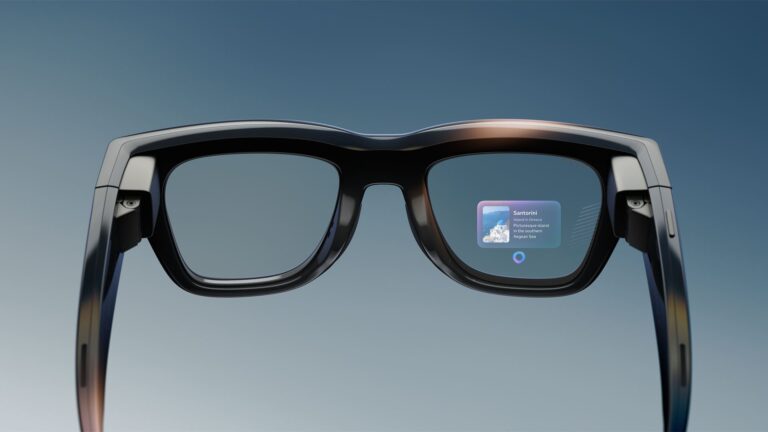
As we roll into 2026, it’s time for our annual ritual of synthesizing the lessons from the past twelve months and formulating the outlook for the next twelve. 2025 was an action-packed year for spatial computing, which continues a gradual uphill ascent toward mainstream traction.
2025 highlights include XR’s ongoing convergence with AI, inflections in non-display AI glasses, the rise of video display glasses, and the unveiling of the long-awaited Meta Ray-Ban Display glasses. Meanwhile, roadmap signals emerged from players ranging from Snap to Apple.
All these approaches – video passthrough AR, optical seethrough AR, and non-display smartglasses – represent form-factor divergence and diversification. That’s a good thing, as XR should include varied formats that are purpose-built and use-case-driven – a key trend in 2025.
Breaking it all down, what were the biggest lessons in 2025? Our research arm ARtillery Intelligence recently tackled this question in its report Spatial Computing: 2025 Lessons, 2026 Outlook. After publishing 2026 predictions here on AR Insider, we shift gears to 2025 lessons.
We’ll break them down weekly, continuing here with #4: Communications is the Killer App.
Lesson 1: XR Devices Diverge & Diversify
Lesson 2: Practice the Art of the Possible
Lesson 3: AR’s Future is Intelligent & Utilitarian
Lesson 4: Communications is the Killer App
Lesson 5: VR < AR… But it Isn’t Dead
Deliberate Positioning
AR’s killer app remains TBD in still-early stages of its lifecycle. But historical killer apps point to things that have high frequency and utility. In AR so far, visual search and multimodal AI carry these attributes, and show positive signs in Ray-Ban Meta Smart glasses.
Meanwhile, another AR killer app is emerging: communications. To be fair, this isn’t new, given that the most successful consumer AR company to date, Snap, blends AR with its core social communications framework. In fact, this makes Snap natively primed to lead in XR’s next era.
We saw this concept take a step forward in 2025 from another influential player: Meta. Its big AR bet in 2025 – Meta Ray-Ban Display Glasses (MRBD) – are built around new ways to communicate. This is clear through both MRBD functions and Meta’s direct statements.
For example, when asked to name one primary use case for MRDG during a Bloomberg interview, Meta CPO Chris Cox answered without hesitation: messaging. The speed of his answer suggests deliberate Meta positioning, which aligned with other signals that we’ve tracked.
Getting more specific, what do we mean by ‘communications,’ and how does that map to MRBD’s feature set? It includes visual messaging that’s in front of you when you need it, but unobtrusive when you don’t. And it’s intuitively controlled with MRDG’s neural wristband.
The Anti-Metaverse
Another compelling feature is live captions that provide subtitles for the world around you, spatially-targeted to specific entities such as a person you’re conversing with. Beyond human communications, there’s also ambient AI that goes where you go and sees what you see.
That last part is all about making you smarter about your world through active prompts and ambient alerts that activate according to pre-defined preferences. Back to Snap, its consumer spectacles launching this year, will likely do all this but with more dimensionally-rich visuals.
Stepping back, why is communications a good starting point? It’s sticky, high-frequency, and multi-user, which accelerates adoption via network effect. But most of all, it’s established and understood in that the thing being sold is relatable and it exists today. It’s the anti-metaverse.
This raises a key lesson as emerging tech tends to gain more traction when there’s no user education required. As our friend Charlie Fink says, (paraphrasing) AR does best when it takes the things we already do and makes them better. It makes the familiar more functional.
To repeat a theme from the previous lesson we covered, killer apps tend to be mundane. “Mundane” sounds like a bad word, but it’s not. It translates to mass-market, which XR leaders are beginning to realize is a more lucrative path than building things that are flashy but esoteric.
We’ll pause there and circle back next week with another 2025 lesson. Meanwhile, see the full report, which includes 2026 predictions.