
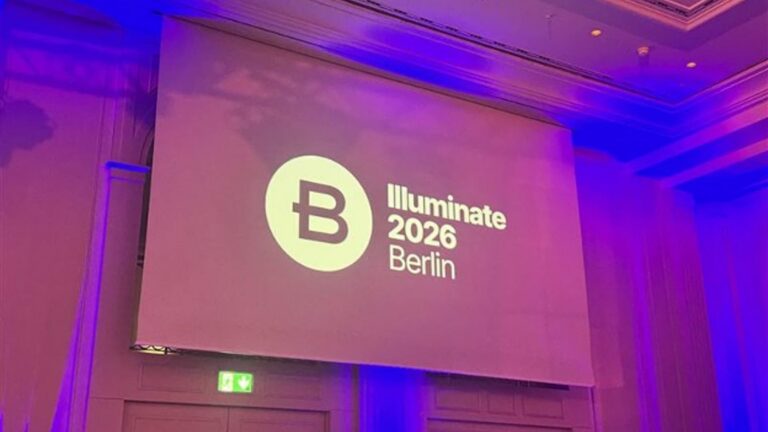

Berlin was not a coincidence.
Bentley Systems chose a city rebuilt from rubble, divided by a wall, and reconnected within living memory as the final stop of its 2026 Illuminate series.
SuperDNA 3D Lab CEO Jatinder Kukreja and CTO Mike Festa attended alongside 250+ engineers, government officials, contractors, and technology leaders. What we heard confirmed a pattern we keep seeing in our own work.
The Scale of What Is Coming
The infrastructure investment cycle is real, funded, and accelerating. But investment does not automatically produce good decisions.
- Germany’s 500-billion-euro infrastructure fund is the most visible expression of a global mandate
- More than 55% of Germany’s bridges are over 40 years old, and 4,500 require renovation by 2034
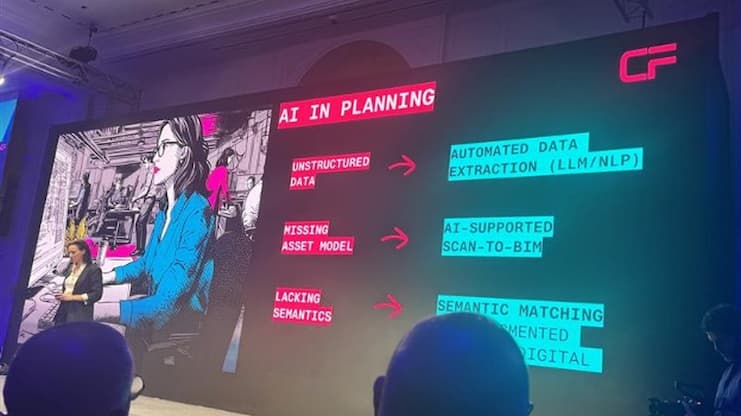
- Keynote speaker Claudia Feiner named the core problem: the bottleneck is not capital or computing power. It is data connectivity

Decades of engineering knowledge remain locked in PDFs, spreadsheets, and site logs that AI systems cannot read. The sector has been generating data for decades. The phrase that travelled furthest from Illuminate Berlin was “future amnesia.” At $106 trillion of incoming investment, that habit is no longer affordable.
Port Polska and What Infrastructure Scale Actually Demands
Port Polska is a single multimodal hub opening in 2032, combining an airport for 60 million annual passengers, 500 kilometers of high-speed rail, and a co-located cargo hub. Total investment: 30 billion euros. In 3.5 years, here is what the program generated:
● 7.7 Million Documents
Not filed, but connected. Accessible across 83 parallel projects on a single platform. The alternative is 7.7 million documents in folders that no one can search.
● 40 Terabytes of Live Project Data
Accumulated across engineering, construction, logistics, and environmental streams simultaneously. Without a unified environment, these streams contradict rather than inform each other.
● 5,700 Engineers on One Platform
Spanning 46 airport projects and 37 rail projects, all operating with shared data governance. Coordination at this scale requires the platform to be the single source of truth.
● 83 Parallel Projects, Zero Parallel Truths
The connected data environment is not a supporting tool. It is the project. Remove the platform and Port Polska does not slow down. It stops.
● Governance Before Technology
The program’s senior BIM administrator presented this as a governance story, not a technology story. The lesson is not that large projects are complex. It is that complexity is only manageable when data is connected, not archived.
● What Most Infrastructure Programs Still Lack
Cities and large programs have engineering models, IoT streams, geospatial layers, and investment decisions that require all three simultaneously. What most do not have is the layer that connects them into outputs structured for the decision-maker, not just the engineer.

The Role Bentley and Cesium Play
Both platforms are foundational to serious infrastructure intelligence. Neither closes the gap by itself.
- Bentley iTwin provides the engineering data environment: structured design data, as-built records, and asset lifecycle information in an interoperable, machine-readable form
- Cesium provides the geospatial backbone: it gives engineering data physical location so infrastructure models exist within a representation of the real world, not in abstract diagrammatic space
Neither platform provides the scenario orchestration layer; the system that accepts a question, selects relevant data and models, runs multiple what-if scenarios, and returns structured, auditable outputs for the decision-maker.
“The conversations at Illuminate Berlin made clear that the infrastructure sector is ready for the intelligence layer,” said Festa. “The data exists. The investment is arriving. What is missing is the system that sits above the platforms, connects the sources, and turns raw data into a decision a team can act on. That is exactly what SuperSim is built to do.”
That orchestration layer is where SuperDNA 3D Lab operates. SuperSim connects 250+ data sources, delivers simulation outputs, and is built on Bentley iTwin and Cesium foundations. The outputs are plain-language, governance-backed, and structured for the people who make decisions, not only the teams that build models.
What the Investment Cycle Is About to Demand
Dublin, Helsinki, Singapore, and Miami have built serious digital twin foundations. Port Polska shows what the same capability looks like at program scale. The pattern across all of them is identical, i.e., data connectivity is necessary but not sufficient.
Further, the value is realized in what happens after the data is connected, when scenarios can be run, compared, and acted on without restarting the analytical pipeline each time conditions change.
Also, the infrastructure investment cycle that Illuminate Berlin described will create enormous demand for the one thing capital alone cannot buy: the speed of good decisions. Berlin confirmed the industry is ready to build that capability. What comes next is connecting it to decisions.
 Phil LaMartina is a contributor at SuperDNA 3D Lab, building scenario intelligence infrastructure for cities and infrastructure programs. The platform orchestrates existing simulation engines, IoT data, and engineering models, including Bentley iTwin and Cesium to generate decision-ready outputs across departments. Learn more at superdna3dlab.com