
 by
by 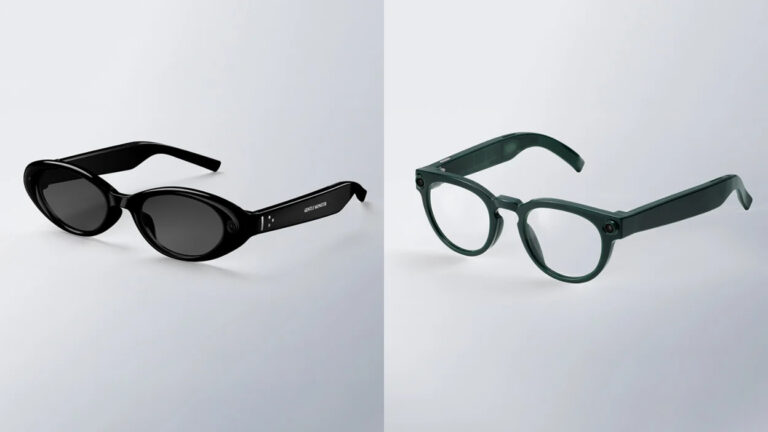
Google I/O is underway, and it’s a typical procession of new products and features. As you might guess, everything is AI-centric – infused with Gemini, Nano-Banana, and other Google AI variants. That includes the smart glasses and XR headsets being built around Android XR.
Sticking with the gadgetry, the short version is that Android-XR display glasses are coming in 2027, while audio glasses are launching this fall in partnership with Samsung, Warby Parker, and Gentle Monster. Much of this was already known, but Google made a few things official this week.
Audio Glasses: This is Google’s answer to the market that’s been validated by Ray-Ban Meta Smart Glasses (RMS). Like RMS, these won’t have a display system and will do things like media capture and audible situational intelligence. These will be released in the fall.
Display Glasses: This is Google’s answer to the still-nascent market for simple display glasses (flat AR, as categorized in our spatial spectrum analysis). The category includes Meta Ray-Ban Display Glasses (MRD) and Even Realities G2. These will be released in 2027.
Project Aura: This is Android XR’s instance on Xreal hardware. It’s meant to offer a Samsung Galaxy XR or Apple Vision Pro-like XR experience (dimensional AR, as categorized in our spatial spectrum), but in a smaller package. Project Aura is scheduled to release this year.
From Audible to Augmented: Charting the Spatial Spectrum
Plain Spoken
Panning back to Android XR’s broader positioning, Google introduced a new term this week: “intelligent eyewear.” This not only reflects reliance on Gemini, but is a plain-spoken approach that deviates from XR’s acronym-centric naming. This is meant to appeal to larger audiences.
Drilling down on the Gemini piece, it will be at the center of the UX. It’s all about telling you about your surroundings and helping you navigate daily interactions. This steps towards the holy grail of physical AI, which breaks away from intelligence that’s erstwhile confined to the web.
To that end, Android XR puts AI at eye level, which makes it more human-centric. It sees what you see and can train itself on your life, pursuant to being a persistent and personal assistant. So Android XR devices are both vessels for Gemini and a perch on which physical AI can be trained.
Use cases include asking Gemini to identify and contextualize things you’re looking at – from food to fashion. There are also utilities like ordering coffee or getting updates about your arriving Uber. This will all be delivered audibly or through line-of-sight visuals, depending on the device.
Market-Validated Model
That last part brings us full circle to the timing and sequential rollout in AndroidXR’s road map. Audio glasses, as Google calls them, will dominate Android XR’s ecosystem in the near term. Meanwhile, Google will step into the world of face-worn visuals with simple heads-up displays.
The latter is a toned-down form of AR that’s meant to appeal to a wider mainstream audience. In other words, these deliberately sidestep geeky and bulky designs in favor of a small display in one eye for situational intelligence that’s better seen than heard (think: messaging & navigation).
Of course, this isn’t new. It not only follows Meta Ray-Ban Display Glasses, but the legacy of Google Glass. Google has learned a lot since then, both technologically and culturally. This is why it’s partnering with fashion brands this time – again, like Meta’s market-validated model.
Regardless, display glasses will take longer for cultural acceptance. So Google – and everyone else – is stepping into it gradually. This means starting with audio glasses, which is where Android XR has a near-term shot at a mass-market play. That will be Google’s foothold to ascend further.