
 by
by 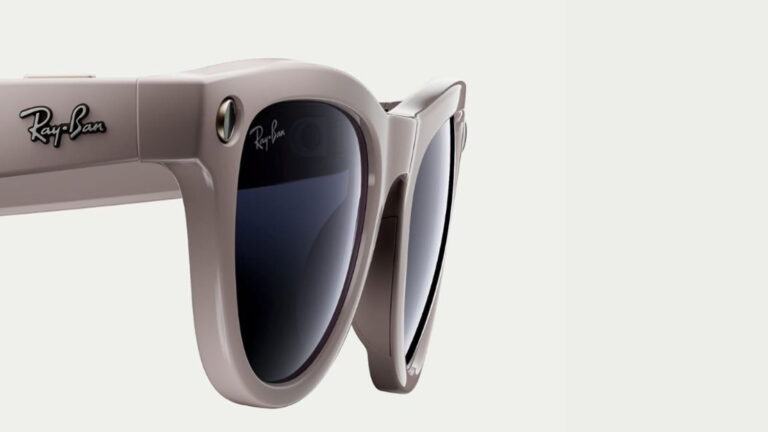

Meta and Google are betting that glasses apps will live inside the phone apps people already use. Strava shows what that unlocks.
Third-party smart-glasses development is genuinely fragmented right now. Meta runs a native companion toolkit and, separately, a web-app path for its display glasses. Snap has Lens Studio and an on-device discovery system. Mentra runs an open store across its supported hardware ecosystem, while several smaller platforms lean on sideloading. Every platform has its own SDK, its own tools and its own idea of distribution — and none of them can hand a developer what a phone platform provides on day one.
The scale is just as lopsided. EssilorLuxottica reported more than seven million AI-glasses units sold in FY2025 across the Ray-Ban Meta and Oakley Meta lines. That gives Meta the only third-party-capable AI-glasses install base at anything like consumer scale.
Yet there is still no open, mass-market way to publish a Device Access Toolkit integration to it. Meta’s documentation says, “All release channels for Device Access Toolkit are currently invite-only,” and on iOS, “Publishing to the App Store is not currently supported.”
Snap has the opposite problem. Lens Explorer is a real discovery system — on-device, moderated and open to developers in the program — attached to AR hardware that, until this summer, had not been openly sold to consumers. Snap’s first consumer AR Specs opened for preorder in June at $2,195 and are expected to ship this fall. The platform with the users has no open store; the platforms with open stores have nothing close to the same installed base.
The instinctive conclusion is that somebody still has to build the missing smart-glasses app store. I think the two biggest platforms have already rejected the premise.
Look at the architecture they shipped. Meta’s Device Access Toolkit is not an on-device glasses SDK; it is a mobile SDK. Developers build an ordinary iOS or Android app that accesses the glasses’ camera, microphones, speakers and, on compatible display glasses, the display itself. Meta’s guidance is explicit: “The glasses do not retain application state. Your app is the source of truth.”
Google wrote the same bet into Android XR even more plainly: “Audio glasses and display glasses use a dedicated activity that runs within your phone’s existing app. This activity is projected from the host device to the glasses.”
Not a new binary or a second account — an activity inside the app the developer already ships. Google says distribution for audio and display glasses is coming, but under its current architecture, the artifact remains part of a phone app living in Google Play.
The bet makes sense the moment you ask what a standalone glasses app store would actually contain. The obvious glasses functions are already built into the platform. Meta AI takes photos, records video, answers questions, translates conversations, and plays media. Building a standalone glasses app around any of those is like building another flashlight app for the iPhone: possible, occasionally clever, but rarely where the lasting value is created.
Standalone experiences will have a place. But Duolingo does not want to rebuild and redistribute its product through a second ecosystem. It wants to add glasses support to the app its users already have installed.
Strava is a useful case study because its Meta glasses integration already exists, and it shows both the progress and the remaining opportunity.
Today, users can capture first-person photos and videos during an activity with compatible Ray-Ban Meta or Oakley Meta glasses. Inside the Meta AI Gallery, they can add Strava metrics such as distance, pace, heart rate and power, then share the media to the Strava activity recorded during the same period.
That is useful, but it primarily improves how a workout is presented afterward. It does not yet transform the workout itself. The integration does not currently place the user’s active Strava route in their field of view, provide Strava-powered off-route warnings, or create a conversational connection to Strava while the activity is happening. The user still has to look at a phone or watch to access most of Strava’s core functionality.
When Meta’s third-party display support matures beyond its current developer-preview stage, Strava could turn compatible Meta display glasses into a live, hands-free extension of its existing app.
For example:
- A user could ask a Strava-powered agent, “How much longer is left on my route?” and receive an answer based on the active activity.
- They could ask for their current pace, average pace, or remaining elevation.
- Strava could proactively warn them before they travel too far off-route.
- The glasses could display a minimal route view, the next turn, remaining distance, elevation and estimated arrival time directly in the user’s field of view.
- The agent could surface the most relevant information at the right moment — showing an upcoming turn while hiding unnecessary metrics.
- Strava could create different experiences for running, cycling and hiking instead of forcing every activity into the same interface.
The user would not need to continuously operate the glasses or reproduce the full Strava app inside the display. Strava could decide what information appears, when it appears, and whether it is better delivered visually or through audio. Users could customize the experience inside the existing Strava app by choosing displayed metrics, enabled warnings, and the frequency of spoken updates.
This is what makes third-party smart-glasses support so valuable. Strava already has the routes, activity history, performance data, users, and product logic. The glasses provide a new interface for delivering that value at exactly the moment it is needed. Strava could design the smart-glasses experience that best complements its product while preserving the existing account, subscription, data, and mobile experience.
That is why the separate smart-glasses app store everyone keeps waiting for may never need to become the center of the ecosystem. The distribution layer is the App Store and Google Play. The winning smart-glasses app may not be a smart-glasses app at all — it may be a feature of an app that already has users.

Asger Mølgaard
AR Insider Guest Author