
 by
by 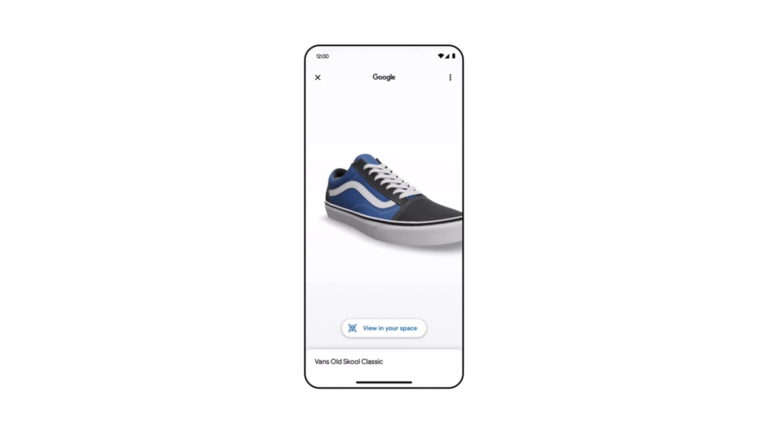
Immersive marketing continues to be an opportune, yet still challenged, segment. Sitting at the intersection of brand marketing and spatial computing, it includes things like sponsored AR lenses that let consumers interact and engage with brands, or virtually try on products.
Driving immersive marketing are a few key elements. Lens creation software arms brands and developers with low-code tools to author AR experiences. Meanwhile, networks like Snapchat and TikTok likewise offer the ability to amplify lenses throughout their social graphs.
There’s also a real business case, which can be seen in the performance metrics around AR campaigns. And though the future of AR is headworn, we’re mostly talking about AR marketing on smartphones. That’s where the scale lies… and brand marketers are all about scale.
This is the topic of a recent report from our research arm, ARtillery Intelligence, including ecosystem analysis and case studies from real AR marketing campaigns. The report joins our excerpt series, continuing in this installment with a look at AR marketing’s supporting tech.
From Footwear to Furniture
Picking up where the last installment of this series left off, a key ingredient in immersive marketing is 3D models. These represent real products and can be the basis for things like virtual try-ons or see-in-your-space experiences. It’s everything from footwear to furniture.
This often requires high-fidelity scans of physical products. These 3D assets are a key ingredient for AR product try-ons and 3D visualization. And there are companies that specialize in building them, such as CG Trader in hard goods and QReal in food. This list will continue to grow.
Meanwhile, IKEA, Wayfair, and others have developed in-house systems to 3D-scan their product libraries. But the real opportunity is for players that can help the long tail of brands & retailers reduce friction in building 3D models for their products. It’s all about lowering barriers.
Closely related to all the above is the need for infrastructure, optimization, and distribution of 3D assets. That includes things like compression technologies and workflow management. The goal is to help brands that want to bring their existing 3D assets (e.g., CAD files) into AR marketing.
Effective delivery of bandwidth-intensive experiences is also critical. For example, Snap Cloud helps developers deliver load-balanced immersive experiences. And its integration of Supabase lets developers link experiences to their own systems, such as product catalogs.
Another example is VNTANA, a 3D content management system that helps organize and optimize 3D assets across a given enterprise. Such tools democratize AR, lower barriers, and accelerate time to market. The opportunity will grow as more brands adopt immersive marketing.
The CTR of AR
While all the above is developing, another question looms over AR marketing: analytics. What are the right metrics to evaluate immersive marketing campaigns? The benefits of AR marketing, as seen in our case studies, involve deep engagement and influence on consumer purchases.
But there isn’t a native metric to capture this yet. The advertising world tends to stick to what it knows, such as impressions and click-through rates (CTRs). But AR engagement may not be adequately measured in these ways as they don’t capture the technology’s true depth.
Of course, the ultimate metric is revenue. It’s tracked in eCommerce, but not for impressions that result in an offline purchase (which are greater in number) three weeks later. So marketers have always relied on metrics that can approximate revenue impact, such as impressions and clicks.
But these metrics, built for 2D media, don’t effectively measure AR. So the goal is to develop native metrics. In other words, what’s the click-through rate (CTR) of AR? We’re starting to see some metrics develop, and these are demonstrated in the case studies later in this report.
For example, one metric seen in several case studies is dwell time. This measures session lengths for a given campaign. AR’s ability to captivate consumers with immersive content has proved to boost this metric, which can in turn boost things like brand affinity, ad recall, and sales.
The goal is to establish benchmarks for AR. Standard units like session lengths can assign value to engagement levels that brand marketers can expect. Because their biggest aversion to AR is unfamiliarity, the development of standard metrics can help benchmark its performance.
We’ll pause there and circle back in the next installments of this series with a deeper dive into challenges facing immersive marketing, and corresponding opportunity gaps. Later installments will show rather than tell with campaign case studies. Meanwhile, check out the full report.