
 by
by 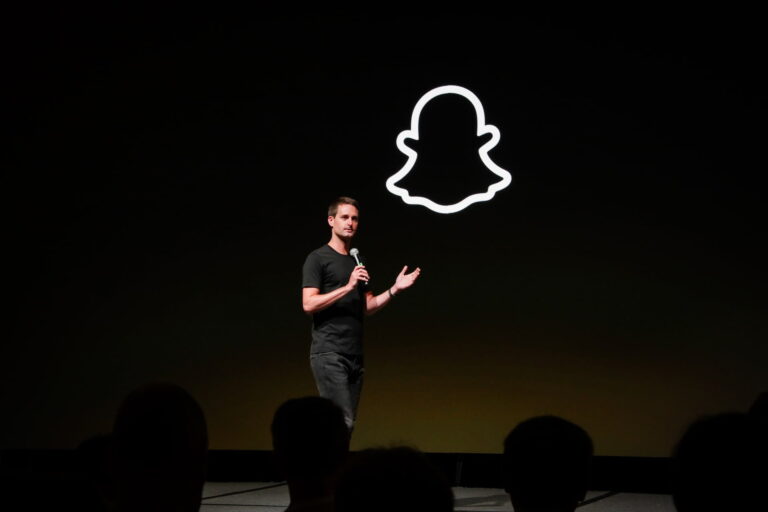
Welcome back to our weekly roundup of happenings from XR and AI realms. Let’s dive in…
The Lede
The White House has decided not to publicly release its voluntary framework for evaluating frontier AI models, despite using it to guide pre-release testing with companies including OpenAI, Anthropic, Google, and Meta. The framework governs cybersecurity, insider risk, intellectual property, confidentiality, and which models qualify for government review up to 30 days before launch. Some security benchmarks may warrant confidentiality, but critics argue that keeping the broader framework private—including criteria for trusted partners and model eligibility—limits transparency and public accountability. As the U.S. shapes AI governance, the decision raises questions about whether a largely closed regulatory process can effectively guide an industry built on increasingly open and globally competitive technology.
Feeling Spatial
Snap earnings look good, while Specs’ launch looms. Snap reported stronger-than-expected quarterly results, with revenue rising 19% to $1.6 billion and an upbeat forecast that sent shares higher, a much-needed jolt after the stock’s 37% decline this year. CEO Evan Spiegel is betting its future on Specs, the consumer augmented reality glasses to launch in September – over ten years in the making. Spiegel claims lightweight AI-powered AR glasses will become the next major computing platform. The strategy pits Snap against Meta, Apple, Google, and Samsung in the race to define wearable AI.
What’s to be done about Meta’s “pervert glasses.” Whelp. Leave it to the king of unintended consequences to take the fun out of AI smartglasses. Now pervs leering at women may actually be filming them. Accordingly, there’s growing backlash against AI smart glasses, creating yet another branding challenge for Meta just as the wearable category gains momentum. CNet’s Scott Stein argues that success will depend on establishing clear social norms, visible recording indicators, and stronger privacy protections. What about sensors that aren’t cameras? That’s my question.
The AI Desk
The European Union’s AI Act entered a major enforcement phase on August 2, with Article 50 requiring AI-generated and AI-manipulated content to be clearly labeled. Chatbots, AI agents, avatars, and deepfakes must be disclosed, while providers of frontier AI models must embed machine-readable identifiers into their systems. The rules apply not only to AI developers but also to “deployers”—the companies, publishers, and creators distributing AI-generated content—making compliance a broad obligation across media and technology. Routine editing and grammar corrections are exempt, but unreviewed AI-generated public-interest content remains covered. Violations can cause fines of up to €15 million or 3% of global annual revenue. For U.S. companies serving European customers, the law effectively establishes new operational requirements and could become the global benchmark for AI transparency, much as GDPR reshaped digital privacy.
Autodesk has expanded Flow Studio with 3D Editor + Canvas, giving filmmakers direct control over AI-generated scenes by combining traditional 3D production tools with generative video models. Instead of relying solely on prompts, creators can block scenes, animate characters, position cameras, and assemble environments in a 3D workspace before using AI to render the final look. The workflow also supports AI-generated assets from platforms like World Labs. Developed by Wonder Dynamics, the update addresses one of AI video’s biggest challenges: precise direction rather than simple generation. By integrating scene assembly, camera control, rendering, and refinement into a single platform, Autodesk is positioning Flow Studio as an AI-native filmmaking tool that bridges established visual effects workflows with the latest generative AI technologies for independent creators and professional studios alike.
Cinematic Corner
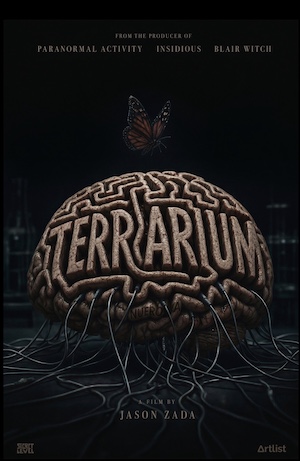
Artlist has announced the cast of Terrarium, a SAG-AFTRA feature billed as a hybrid AI horror film, directed by Jason Zada (The Forest) and produced by Paranormal Activity veteran Steven Schneider. Rather than replacing actors, the film uses AI throughout preproduction, visualization, and postproduction while adhering to union AI provisions negotiated after the 2023 Hollywood strikes. The newly announced cast includes Jake Busey, Kylee Levien, Ace Greene, Lynn Kim Do, Austin Willard, and Rachel Sorsa. Artlist has not disclosed the budget, but based on the production profile, union status, and lack of major stars, it is likely in the $2–5 million range. The project’s significance extends beyond its cast: Terrarium is one of the first union-backed features designed from the ground up around an AI-assisted production pipeline. If successful, it could become an important proof of concept for how AI can reduce costs and production time while remaining compatible with Hollywood’s existing labor agreements.
Higgsfield has released Hell Grind, its 95-minute AI-generated horror feature, free on YouTube, along with every prompt, asset, and workflow used to make it. Produced by a 15-person team for $500,000, the film debuted at the Cannes Marché du Film and has drawn attention as much for its production process as its story. The Wall Street Journal reported that about $400,000 of the budget went to AI compute, highlighting a radically different cost structure for filmmaking. Variety praised the film’s photorealistic visuals but found the narrative less compelling, arguing the production pipeline is the real achievement. By open-sourcing the entire project, Higgsfield is positioning Hell Grind as a blueprint for AI-native filmmaking. Whether audiences embrace the movie or not, it may be remembered as an early milestone in feature-length AI production rather than for its artistic merits.
Toronto filmmaker Joss Moroni dropped this gem on X this week. “THE FALL” is a story about good and evil, and about courage, and about what it costs to be free. A year ago it would have stayed a story I told myself. AI is the only reason it’s a film instead,” he said.
Disney is embracing the creator economy through a first-of-its-kind partnership with TikTok that gives select creators licensed access to characters and scenes from Disney, Pixar, Marvel, Star Wars, and FX. The resulting fan-made videos will appear on TikTok and in a new vertical “Verts” feed on Disney+, marking the first time TikTok content has been integrated into another streaming platform. The U.S. pilot launches later this year before expanding internationally. The move acknowledges that fan-created short-form video has become a major driver of audience engagement and offers Disney a new way to reach younger viewers while maintaining control of its intellectual property. The partnership also signals Disney’s growing interest in creator-led content as streaming services increasingly adopt mobile-first, vertical video experiences.
Spatial Audio
This column has a companion, the AI/XR Podcast, hosted by its author, Charlie Fink; Ted Schilowitz, former studio executive and futurist for Paramount and Fox; and Rony Abovitz, founder of Magic Leap and Synthbee AI.
Last week’s guest was Mark Drummond, CEO of Pixie (see video below) Our guest this week is Courtney Harding, founder of Friends with Holograms. We can be found on Spotify, iTunes, and YouTube.
Episodes drop on Fridays, and you can find them on podcasting platforms Spotify, iTunes, and YouTube.

Charlie Fink
AR Insider Contributor