
 by
by 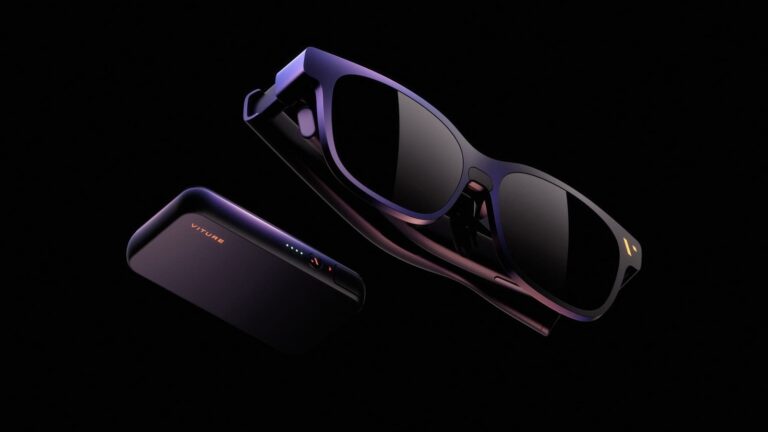
As you may have heard, Viture Pro 2 launched this week, joining a robust procession of video display glasses from Viture. Marking the fifth birthday for the momentous XR player, the device weighs 63 grams and costs $299 – making it a significant evolution from its predecessor.
To pause for definitions, video display glasses sit in a unique spot on the spatial spectrum with the simple yet compelling value proposition to mirror content from USB-C devices. This involves massive virtual screens to watch movies, play games, or be productive in a private environment.
Viture Pro 2 is the successor to Viture Pro, and follows launches over the past year for Luma Pro (see our review), Ultra, and Beast. The specs are evolving fast, and the price is dropping as the video display category becomes a unit sales leader among XR device classes.
Thinner, Lighter, Cheaper
One reason for this popularity is a straightforward value proposition. Without getting too fancy with spatial and world-immersive content (though that’s coming from VITURE), the ability to consume all your already-owned content in a compelling and media-rich way is gaining traction.
As for more specs and particulars on Pro 2, it’s Viture’s lightest to date at 63 grams, as noted. This makes it 16 percent thinner and 20 percent lighter than the original Viture Pro. Its Sony micro-OLED displays reach 1,600 nits and can project a perceptual 146-inch screen for all your content.
But to provide more hands-on color from the pros, we’ve rounded up our favorite reviews. You can see them all embedded below. Stay tuned for more coverage as the video display glasses market heats up. There’s stiff competition and a feature arms race amongst Viture, Xreal, and others.