
 by
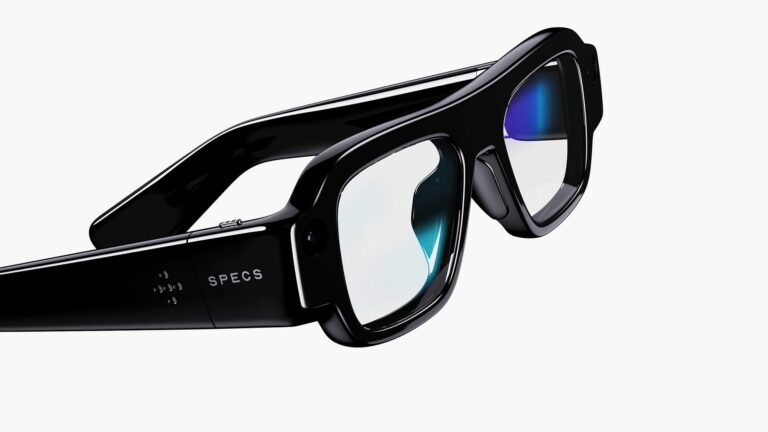
One of the less-discussed opportunities for Specs, as we noted in our device review, is enterprise productivity. Attributes of the device – being standalone and spatial, among other things – align with guided productivity in a range of enterprise and industrial settings.
Snap, or more specifically Specs Inc., knows this. It has developed several collaborations with enterprise XR players to build enterprise experiences for Specs. These endpoints range from IT field support (think: fixing networking equipment) to automotive repair and assembly work.
One of those early partners is Hololight. It has built an experience for Specs that helps deployed enterprise front-line workers receive line-of-sight guidance. And it’s built around a streaming architecture that lightens the computational load to perform on a glasses form factor.
This was explored in our recent Op/Ed from Hololight co-founder, Florian Haspinger. Additionally, we had the chance to catch up with the company to dive deeper into a few burning questions. Below is the full Q&A, and stay tuned for more coverage of Specs’ enterprise play.
Specs & Streaming: Q&A with Hololight
Starting simple, what is the nature of your collaboration with Specs?
Hololight announced interoperability between its enterprise XR streaming platform and SPECS, Snap’s new augmented reality glasses, unveiled by Snap co-founder and CEO Evan Spiegel at a launch event in Los Angeles on September 16. The integration brings Hololight’s streaming technology to SPECS, allowing the glasses to display complex, high-fidelity content without heavy onboard processing.
Backing up for our readers that are unfamiliar, what does Hololight do?
Hololight builds the software layer that streams XR applications from a company’s own servers or cloud to lightweight headsets and glasses. Its customers are engineers, designers, and technicians in manufacturing, automotive, aerospace, and defense who use it to work with full-detail industrial models in AR and VR without preparing or simplifying the data first.
Sticking with Hololight and its background, give us a bit more context on how you accomplish these things from a technical perspective.
Hololight streams pixels, not data. The application runs and renders on a workstation, on-premise server, or in the cloud, including ray tracing and realistic lighting. The rendered images are encoded, encrypted, and transmitted over Wi-Fi, 5G, or LiFi, and the device decodes and displays them at up to 90fps with sub-50ms latency*. The technology is Hololight’s own, developed in-house and optimized for NVIDIA RTX GPUs.
Bringing Specs back into the discussion, how do that approach and your capabilities apply to this device and enterprise goals?
Glasses built to be worn all day can not carry the thermal and power budget of a high-end GPU. Moving the rendering off the device removes that constraint: SPECS stays light and comfortable, while the content it displays is limited by the server behind it rather than the hardware on the wearer’s face. Scene alignment persists across sessions, so digital content stays anchored without recalibration each time.
How does that translate to the UX and use cases for Hololight on Specs? What can end users do?
Two things at once. On the high-end side, the same engineering and design applications Hololight already streams – Autodesk VRED, KeyShot, NVIDIA Omniverse, Unreal, Unity, and other OpenXR applications – become usable on glasses that are this light. On the everyday side, the same environment carries ordinary work tools: browser, email, documents, presentations. That combination is what Snap describes as a secure, high-performance spatial workspace.
That range of use cases seems to broaden your addressable market – and that of Specs. How important is that wider market in enterprise XR’s early and still-challenged phases of adoption?
Primarily, organizations that already have serious 3D and engineering workloads and have been held back by what a headset can carry. With SPECS, that extends further to professionals who want one lightweight device for both a design review and the rest of their working day, rather than a dedicated headset they put on for twenty minutes at a time.
Beyond enterprise users, what benefits does your approach bring to device manufacturers that are constantly trying to slim down and deal with classic XR design trade-offs? For example, bulk versus UX richness and functionality?
Shifting the computational load off the device gives hardware makers room to optimize for what wearers actually notice: weight, battery life, and a form factor closer to ordinary eyewear. As external rendering hardware improves, connected glasses can gain visual fidelity and capability without a hardware redesign.
Though we’ve been talking about this in the context of the Specs integration, it would seem that your approach – particularly the streaming approach – is device-agnostic and therefore strategic in its broader addressable market.
Yes. Hololight’s streaming is hardware-agnostic by design, supporting Apple Vision Pro, iPad, Meta Quest, HTC Vive, PICO, and Microsoft HoloLens 2, alongside engine integrations for Autodesk VRED, KeyShot, NVIDIA Omniverse, Unreal, Unity, and more, and now extending to SPECS. The same underlying technology powers experiences across devices rather than locking content to one. It also decouples an organization’s XR investment from any single headset: as new hardware arrives and older devices reach end of life, the applications keep running unchanged on the backend.
How does data security fit into all of this?
This is central for enterprise use, and it is a direct consequence of the architecture. Because only rendered pixels reach the glasses, the underlying models, files, and data never leave the customer’s own infrastructure and are never stored or processed on the device. That matters wherever headsets are shared between people or locations, and it is why the approach works in regulated environments such as defense.
Synthesizing all the above, what does your approach signal for the future of XR?
It reflects a shift away from bulky, single-purpose headsets toward glasses light enough to wear through a working day and capable of handling real work while worn. Streaming has been able to deliver full-detail models to headsets for years. What changed is the hardware on the other end.