
Welcome back to our weekly roundup of happenings from XR and AI realms. Let’s dive in…
Feeling Spatial
Snap Cuts Staff While Doubling Down on AR Glasses. Snap is laying off a large portion of its workforce while continuing development of its Specs AR glasses through a new spin-off company, Specs. Snap is narrowing its focus around AR hardware and platform software, even as it reduces operating costs. The layoffs reflect pressure on Snap’s core ads business. The continued investment in Specs shows Snap still views glasses as its primary long-term product. The device is built on Qualcomm’s Snapdragon AR platform, continuing a multi-year partnership, which the companies announced last week. Snap reaffirmed that its next-generation specs are still scheduled for release in 2026. Specs will be the only see-through XR system available, since Magic Leap and Microsoft HoloLens have sunset their devices. While no pricing information has been released, company representatives acknowledged that Snap can’t afford to underwrite the price of hardware like Meta does. As a result, the cost will be over $1,000.
Bloomberg’s Mark Gurman reported that Apple is preparing to announce AI-powered smart glasses as early as this spring, with a target release in December. The device is expected to compete with Meta’s Ray-Ban glasses, using cameras, microphones, and on-device AI to interpret surroundings and deliver contextual responses through voice interaction. It will likely be tied closely to the iPhone.
Taking Up Space
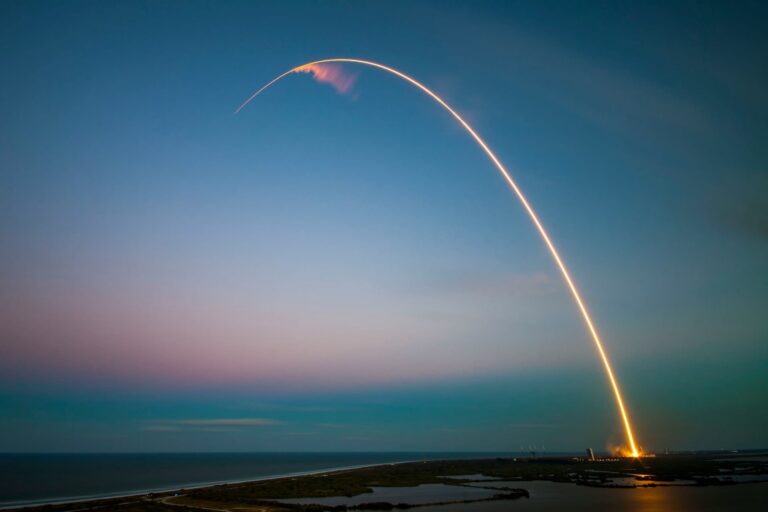
Welcome to the Space Boom. The successful NASA Artemis II mission, which concluded flawlessly last week, has re-filled the market’s optimism that future riches are within reach of the world’s biggest corporations, justifying stratospheric valuations. Space stocks like RocketLab, Planet Labs and Intuitive Machines, in particular, are soaring.
Amazon Moves Into Satellite Connectivity. Amazon is moving to merge with Globalstar, positioning itself as a direct infrastructure provider for satellite connectivity. The deal shifts Globalstar from a partner dependent on Apple into part of Amazon’s Project Kupier, a plan to build and operate a constellation of thousands of low Earth orbit satellites. Amazon could then deliver broadband internet from space, similar to SpaceX’s Starlink. The goal is to provide connectivity in underserved areas and create a new infrastructure layer that Amazon controls.
Cinematic Corner
Watch the last three episodes of Linda’s Last Podcast below. Produced by the author of this column, you can see the series archive and subscribe on YouTube.
Spatial Audio
This column has a companion, the AI/XR Podcast, hosted by its author, Charlie Fink, and Ted Schilowitz, former studio executive and futurist for Paramount and Fox, and Rony Abovitz, founder of Magic Leap and Synthbee AI. This week, our guest is Alan Lasky, visual effects supervisor (his credits include The Mandalorian), studio executive, and futurist. Episodes drop on Tuesdays, and you can find them on podcasting platforms Spotify, iTunes, and YouTube.
Header image credit: SpaceX on Unsplash
 Charlie Fink is an author and futurist focused on spatial computing. See his books here. Spatial Beats contains insights and inputs from Fink’s collaborators, including Paramount Pictures futurist Ted Shilowitz.
Header image credit: Solen Feyissa on Unsplash