
 by
by 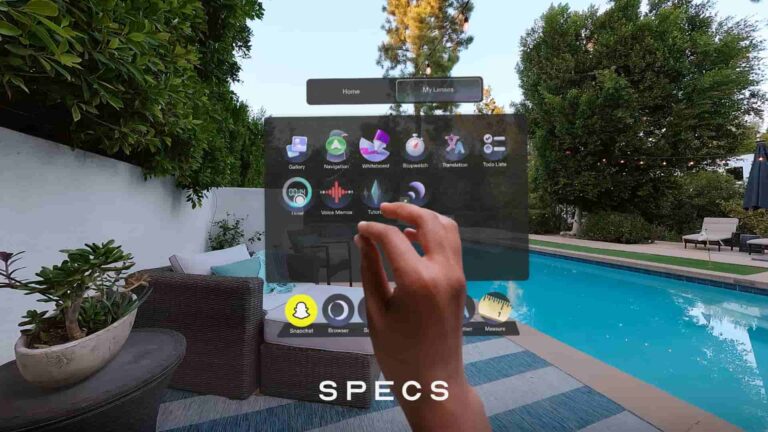
Around 2016 – the year this publication launched – the AR industry as we know it was kicking off. Marked by Magic Leap, Microsoft HoloLens, and work underway at Meta (then Facebook), it was driven by exuberance and assumptions that ubiquitous AR was imminent.
That ambitious (and incorrect) vision foresaw near-term glasses that were functionally expansive, UX rich, affordable, and stylish. The industry has since collided with the technical reality that all these things aren’t possible in the same device. So it retreated to what we call “lite AR.”
Led by Ray-Ban Meta Smartglasses, toned-down AR flavors have since validated a real market. And they’re saved by AI, as ambient intelligence makes up for a lack of visuals. AI redeems the absence of magic and holography that we were once promised and have since given up on.
But elsewhere in the spatial spectrum, another device has suddenly fulfilled those 2016 promises. Ten years later, Specs are here. The consumer-geared device offers full-featured spatial AR that understands and interacts with its surroundings in a standalone vessel (no tether).
We were fortunate enough to be among the few invited to demo Specs at Snap HQ in Santa Monica last week. The short version: Specs could mark the dawn of a long-unfulfilled AR promise, or what Evan Spiegel is calling “intuitive computing.” What does that mean? Let’s get into it.
Starting Point
Rewinding a few months, Specs were panned by many when unveiled in June. Though it was mostly social media hot takes rather than reasoned analysis, even the tech press was a bit hard on Specs. Now, after trying it – as we speculated – the chorus of punditry has changed its tune.
Yes, Specs still have a $2,195 price tag, but there’s consensus now that they deserve to. The device checks many boxes, including comfort, optical UX, software & UI, and content availability. These will each improve over several generations but are meanwhile a solid starting point.
First, let’s tackle the elephant in the room: size. Specs are beefy, but less than post-unveiling hot takes may have you believe. They don’t smash your ears and were comfortable for the duration of our 30-minute demo (longer stress tests will come), with good weight distribution.
The UX, built on Snap OS, is elegantly designed for gestural inputs that you pick up quickly – cashing the check that Spiegel’s “intuitive-computing” designation writes. With some interactions, such as pinching and dragging virtual objects, we found ourselves doing it without instruction.
Much of this is grounded in a home experience that’s activated when you open your palm. There you see launch points such as an app tray (more on that in a bit), a quick menu (think: volume, skip songs, etc.), and what could be the ultimate Specs force multiplier: Specs Intelligence.
Dominoes to Darts
There’s lots of talk in XR circles these days about the fusion of XR and AI. But there’s more speculation than reality so far. A good portion of the latter has been accomplished by Snap, given generative AI workflows for creators, and prompt-driven Imagine Lenses for users.
Those efforts live on but Specs Intelligence is something different. It’s more of an orchestration layer that creates automations for users’ various life tasks. That includes everything from navigation to personal alerts to lifelogging to pushing you flight information at the right time.
That list of functions is driven by the apps you connect to Specs Intelligence, so the possibilities are expansive. Similarly, you can use it on macOS and iOS, even if you don’t own Specs. This is smart to get the app out there and whet appetites to unlock the full-fat Specs experience.
Beyond Specs Intelligence – but sticking with things that happen on the device – Specs apps available on day one eclipse the typical app tray. There’s a range of experiences from dominoes to darts, entertainment, live language translation, and athletic training (see longer list).
This is another place where Snap holds an edge. Due to a robust Lens Studio developer community – cultivated in 10+ years of mobile lenses and 3+ years of faceworn lenses – Specs hit the ground running with experiences on day-1, and a vibe-coding springboard for many more.
Spatial Stack
Stepping back, it’s important to define what Specs are and aren’t. In other words, where does it fit on the spatial spectrum? This is important for contextualizing where it competes and the market segment it occupies. Beware of sloppy size/cost comparisons to Ray-Ban Metas.
First off, in the main AR subdivision of optical see-through (OST) versus video passthrough (VPT), Specs are OST (Vision Pro is VPT, by comparison). It also offers spatial visuals, as opposed to flat (Meta Ray Ban Display Glasses) and no visuals (Ray-Ban Meta Smartglasses).
That puts Specs at the premium tier of headworn AR in every respect, which explains the price tag. The above combination of factors isn’t easy nor cheap to accomplish. Snap has been able to pull it off by building and buying its way towards a full spatial stack for vertical integration.
It’s also worth noting that in the premium AR tier where Specs sit, it’s the only device that can claim four key attributes: standalone architecture (no tether/puck), OST display system, spatial visuals, and consumer orientation. Some devices check some boxes, but none check all four.
For example, Meta Ray-Ban Display Glasses are standalone but without spatial visuals. Apple Vision Pro has spatial visuals but is VPT (not OST). Magic Leap 2 (end of life) is OST and spatial, but not standalone nor consumer. Xreal Aura checks most boxes, but it isn’t standalone.
Cut the Cord
Sticking with Xreal Aura, it may be Specs’ closest competitor. Reviewers and pundits who compare Specs to Aura (not Ray-Ban Metas) are the ones to pay closest attention to. We also hear that Aura may cut its umbilical cord in the near future, making it an even closer competitor.
The other reason that we mention Aura is that it’s the player that will challenge Specs’ claim to the enterprise XR throne. Both devices stand to inherit this market, given that the previous generation’s standards – Microsoft HoloLens and Magic Leap – have exited stage left.
That leaves many enterprise XR adopters with end-of-life devices, scrambling for alternatives. Though Aura carries a smaller price tag (at least in what Xreal has indicated so far), Snap could have a meaningful advantage, which comes down to the absence of that pesky tether.
Though a tethered puck makes any device lighter – an enterprise advantage – it’s also a seldom-discussed snag risk. In other words, the chance that the dangling cord can get caught on something – like a machine part – introduces a large and potentially lethal enterprise risk factor.
Altogether, though enterprise markets are less sexy than consumer markets, the former could end up being Specs’ sleeping-giant opportunity. And it’s already gotten started with partnerships to deploy visually-guided workflows with Salesforce, AWS, NVIDIA, Trifork, and Hololight.
Long Game
The bottom line is that Specs have finally been given the chance to speak for themselves. Reviewers like what it has to say, with some criticism at the margins. Most gripes continue to be about the price tag, but that’s often balanced with recognition of the device’s long-game play.
Unpacking that a bit, Specs aren’t meant for everyone. They’re the first step in an evolutionary path towards Snap’s vision for intuitive computing. Subsequent steps, taken over many years, will include generational improvements in functionality, wearability, price, and market penetration.
That means Specs’ first few years of unit sales won’t reach mass-market levels, and that’s okay. Its success shouldn’t be evaluated on that metric. As Evan Spiegel said on Snap’s Q2 earnings call, he doesn’t expect Specs to reach mass-market levels until the end of the decade.
Meanwhile as the consumer market acclimates to faceworn computing (we’re not there yet), and the price falls to mainstream-friendly levels, Specs could bridge the gap through enterprise XR. We’ve heard this story before (looking at you Magic Leap), but Specs could pull it off.
Through that lens, Specs should be seen as an investment in an early-mover advantage in intuitive computing – skating to where the puck is going. As for hot takes from Joe and Jill influencer that they aren’t going to buy Specs, it doesn’t really matter. This device isn’t for them.