
 by
by 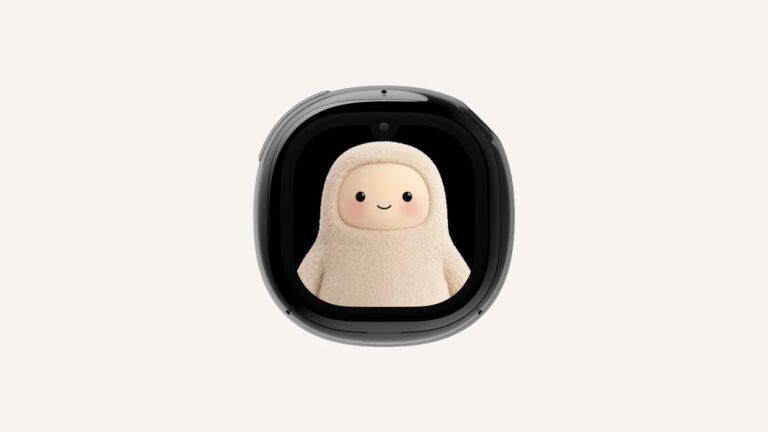
Welcome back to our weekly roundup of happenings from XR and AI realms. Let’s dive in…
The Lede
The Tech Takeover of Hollywood Is Almost Complete. Paramount’s pending acquisition of Warner Bros. Discovery would put two historic Hollywood studios, HBO, CBS and CNN under David Ellison, backed by his father, Oracle cofounder Larry Ellison. Amazon already owns MGM, Sony owns Columbia Pictures, and Apple and Netflix finance and distribute films worldwide. Technology companies and technology fortunes now fund an expanding share of Hollywood’s production and distribution. Disney and Comcast’s Universal remain major studio owners. Paramount reached a settlement with twelve states challenging the merger, though judicial approval remains pending. The deal would further concentrate studios, streaming platforms and film libraries under ownership backed by technology wealth. (TheWrap)
Musing on Meta
Muse Reaches No.1 Meta Adds Voice and Video. Meta’s Muse reached No. 1 among free iPhone apps in the United States, Axios reported September 18, ten days after launch. The personal agent works across connected services to handle tasks including shopping, travel bookings and email. Users choose which accounts it can access and what permissions it receives. At Connect, Meta announced real-time voice conversations, customizable voices and animated avatars for video conversations. Each agent will receive its own email address. Meta also announced additional shopping and payment integrations. Muse runs in a dedicated virtual computer and can continue working on assigned tasks after users close the smartphone app. | Axios
Meta Connect Introduces $1,299 VR Glasses. Meta introduced Meta VR Glasses at Connect on September 23, with a spring 2027 launch planned. The headset weighs about 100 grams, with computing, battery and storage housed in a separate puck connected by an optical tether. It uses micro-OLED displays, pancake lenses and Qualcomm’s Snapdragon Reality Elite processor. Meta says the battery supports up to three hours of media playback. The glasses support eye and hand tracking, virtual monitors, movies and Quest content. Touch Plus controllers are sold separately. The device supports Dolby Vision and Dolby Atmos, and Meta describes it as the first IMAX Enhanced certified VR headset | TechCrunch
Muse Charm Is The Muse Agent on a Keychain. Meta also previewed Muse Charm, a pocket-sized device for talking to its AI agent. “We’ve packed a lot of technology in this little guy,” said the Meta founder during his Annual Meta Connect keynote. The gadget combines Muse’s real-time voice and avatar features in hardware that can hang from a keychain. Zuckerberg used it as another way to speak with Muse and show the agent the surrounding environment. The device has a roughly two-inch touchscreen and a built-in 5G connection. Meta’s announcement says the company will share details later this year. Still no word on the device Jony Ive is building for OpenAI but you can be sure this got their attention. | Reuters
Processors & Palm Trees
Qualcomm’s annual Snapdragon Summit unfolded this week in Maui, and AR Insider was invited to attend and cover the event (which didn’t take much convincing). Among other things, the chip giant announced two Elite 8, Gen 6 chips (plain and extreme variants), and the new Sound Elite, Gen 2 to power hearables. These and other updates sit under the company’s broader ‘personal AI‘ initiative, where all your devices – wearables, hearables, seeables, touchables – ingest context and data to formulate personalized profiles so agents can do their thing. Spanning concert tickets to video editing, this is all based on the notion that we’re moving from the age of apps to the age of assistants to the age of agents. Qualcomm is betting big on this vision and positioning itself now to skate to where the puck is going. We’ll see how well that bet pays off. Wall Street likes it so far.
The AI Desk
Jensen Huang Puts the Chance of AI Ending the World by 2030 at Zero. Nvidia CEO Jensen Huang said there was a “0% chance” AI would end the world by 2030 in an interview with CBS News. He urged companies to continue developing the technology quickly and questioned the motives behind public predictions of catastrophe. Huang said developers should establish that products are safe before releasing them. His comments followed warnings from AI researchers and executives about increasingly capable systems and proposals to slow development. Huang also argued that existing laws provide ways to hold companies accountable. The interview with correspondent Jo Ling Kent aired on CBS Sunday Morning on September 20 this week. | Tom’s Hardware
AI-Generated Intelligence Prompts Plans to Board a Chinese Ship. Following the accidental US bombing of a girls school in Tehran in February, the U.S. military experienced another epic blunder when it prepared to intercept a Chinese vessel after an AI-assisted intelligence report incorrectly identified its cargo as components for a nuclear weapons program. Military aircraft were airborne when officials reviewed the intelligence and halted the operation. According to sources, an analyst used a chatbot to combine open-source information with classified signals intelligence, then used AI again to format the findings into an intelligence report. So, Jensen, tell me again about the zero chance AI could kill us? | TechCrunch
DraftKings Used AI to Target Betting Promotions, Times Reports. DraftKings used machine learning to identify casino customers likely to lose more money after receiving promotional offers, according to a New York Times investigation. Its internal “elasticity” score assessed customers using information including betting frequency, account balances and losses relative to wagers. Former employees said the system directed promotions toward people displaying signs of problem gambling. DraftKings disputed that characterization, saying offers went to customers showing sustained engagement (e.g., are addicted to gambling). Of course they did. What do you think people do at work all day? The plot how to extract more value. | The New York Times
Amazon Drone Deliveries Bring Noise Complaints in Texas. Residents of Richardson, Texas, are challenging the noise and frequency of Amazon Prime Air deliveries over their homes, The New York Times reported. The city approved zoning for the operation in December, and deliveries run between 7 a.m. and 8 p.m. Neighbors near the distribution center described repeated flights interrupting time outdoors and remaining audible inside their houses. Amazon said customer response had been overwhelmingly positive and that fewer than 1 percent of program inquiries this year concerned noise. The company said it had adjusted operations following complaints. Residents are contacting officials in other cities where Amazon plans to expand. Question: is it illegal to shoot drones over your house with a shotgun? Asking for a friend. | The New York Times
Neuralink Demonstrates Intended Speech Through a Reconstructed Voice. Neuralink released a September 18 demonstration featuring Terry, a participant in its VOICE clinical trial, using a brain implant to produce speech. According to the company, he first trained the system by attempting to mime words, then progressed to thinking the words and hearing them spoken in a reconstruction of his voice. Neuralink said Grok Voice provides the spoken output. The trial studies communication for people with severe speech impairment. The implant records neural activity, and software maps signals associated with intended speech to words. Last week, Paradromics’ brain implant enabled a 68-year-old Michigan woman who had lost most of her speech to a paralyzing neurological disease to hold spontaneous conversations in real time. | TeslaNorth
Disney Names Character.AI’s Karandeep Anand Its First Companywide CTO. Disney appointed Character.AI CEO Karandeep Anand as its first companywide chief technology officer. He joins October 2 as senior executive vice president and CTO, reporting to CEO Josh D’Amaro. His responsibilities include enterprise technology, infrastructure, data and AI platforms, and product and engineering teams. Several members of Character.AI’s technical staff will also join Disney. Anand previously held senior roles at Meta, Microsoft and Brex. At Character.AI, he oversaw a consumer chatbot business that expanded into AI-generated entertainment, including microdramas. The appointment follows Disney’s promotion of former Google and YouTube executive Adam Smith to lead its streaming business earlier that week. | Cartoon Brew
Jeffrey Katzenberg Calls for Hollywood to Adopt AI. Jeffrey Katzenberg urged Hollywood to work with AI developers in an essay published September 23. The DreamWorks cofounder and former Disney studio chairman described creative workers’ resistance as rooted in their commitment to their craft. He revisited his 2023 prediction that AI could reduce the time and cost of producing animation by as much as 90 percent within three years. Katzenberg cited technological transitions involving Kodak, Blockbuster, Apple and Netflix and argued that filmmakers should help shape how the tools are used. His proposed approach brings Hollywood’s creative expertise together with developers. This argument has strong historical support and is true – we are on the precipice of a new golden age. But… could this time be different? There is a growing chorus of prestige filmmakers speaking out in favor of AI as a tool for better, faster, cheaper production, as Katzenberg does here. No one is talking about what this does to the culture and economics of filmmaking. Maybe it’s not technology changing a workflow, maybe it’s technology changing the audience. | Variety
Cinematic Corner
This gen-AI video, Prometheus One, written and directed by Ari Kuschnir is very good. It may kill you. We don’t know. But it’s really good.
AI ByMosX Continues The Quiet Giants. “It Looked At Him And Kept Walking” follows Haldr across frozen Earth in the year 3080. He must deliver a sealed capsule to Holdfast while General Vossler and the White Order pursue him. His companions are Torv, a six-ton war mammoth, and Vig, a killing machine that stops to examine flowers. The film belongs to AI ByMosX’s The Quiet Giants, a series of standalone stories sharing a world inhabited by colossi. The creator credits Dreamina and says one person made the production, with color grading and sound design completed by hand in DaVinci Resolve, according to the description.
Gabriel Olson Makes a DuckTales Fan Trailer. Director Gabriel Olson used generative AI to create a DuckTales fan trailer, edited by Jason Pachomski. His creative brief imagined an Amblin production from 1989. In the accompanying description, Olson recalls the original show’s appeal as a family adventure into strange and unexpected places, comparing it to Indiana Jones for children. He describes drawing on his directing experience to make the trailer with the tools available to him. The project is presented as an unofficial, noncommercial fan production. Its credits identify Disney as the owner of DuckTales and its characters. Olson shares the finished trailer on his YouTube channel.
Spatial Audio
This column has a companion, the AI/XR Podcast, hosted by its author, Charlie Fink; Ted Schilowitz, former studio executive and futurist for Paramount and Fox; and Rony Abovitz, founder of Magic Leap and Synthbee AI.
Our guest last week was Jan Goetgeluk, founder and CEO of Virtuix (NASDAQ: VTIX). The company supplies VR treadmills for entertainment and training applications (see episode below). Our guests this week are Simon Horsman and Daniel Wood, co-founders of Quiby, software that predicts box office hits based on scripts.
Episodes drop on Fridays, and you can find them on podcasting platforms Spotify, iTunes, and YouTube.
Charlie Fink
AR Insider Contributor