
 by
by 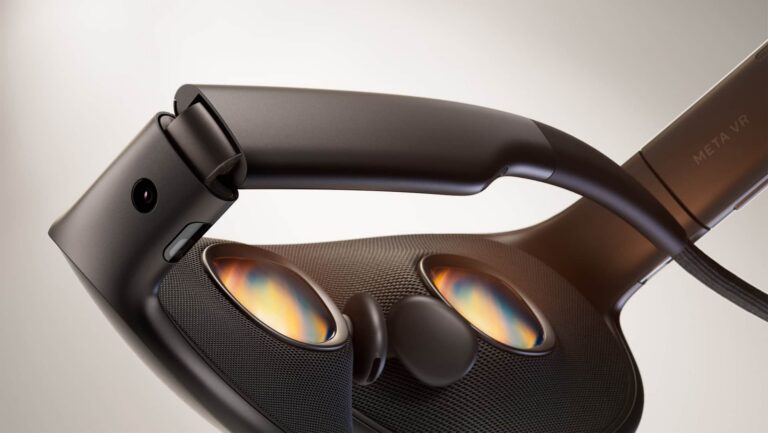
Meta has switched things up with the new Meta VR Glasses unveiled last week. Not only are they branded differently – dropping the Quest convention first launched in 2019 – but it’s a fundamentally different approach to VR. It’s lighter, more comfortable, and more powerful.
Meta has achieved that combination of factors through one defining factor in Meta VR Glasses: offloading compute and battery to a tethered puck. As we know, XR design is a difficult game of tradeoffs. In this case, it traded Quest’s signature standalone design for a tethered one.
Stepping back, when Quest 1 launched, there was a movement towards everything being “standalone” in VR, as opposed to previous PC VR standards. But Meta has since determined that users would rather have weight, bulk, and heat latched to their belt than on their face.
Spatial Specs
As for specs, Meta VR Glasses feature what Meta calls a “5K Infinite Display.” This consists of micro-OLED panels (Quest variants used LCD) that offer 5.5 megapixels per eye resolution. This translates to 37 pixels per degree, which is an upgrade from Quest 3’s 25 pixels per degree.
The glasses weigh 100 grams, which is about a fifth the weight of Quest 3 and about a sixth the weight of Apple Vision Pro. That brings us back to the decision to move to a tethered design, which could open up mobility-friendly use cases, not to mention more social acceptability.
As for the compute puck that sits at the end of that tether, it’s powered by Qualcomm’s new Snapdragon Reality Elite processor. This brings Meta VR Glasses 11 percent higher max GPU frequency compared to the Snapdragon XR2+ Gen2 that Quest 3 employed.
Other standard specs include eye-tracking cameras, full-color passthrough sensors, and 6DOF spatial tracking. The user interface is based on a mixture of gaze and gestural inputs, like Apple Vision Pro. As for pricing and availability, it will go on sale in Spring 2027 for $1,300.
Review Roundup
Meanwhile, what’s the consensus among reviewers? Many say that Meta VR Glasses are the most comfortable VR device they’ve worn, without losing performance. So to characterize the reaction and save you time, we’ve rounded up our favorite reviews so far. Check them out below.