
 by
by 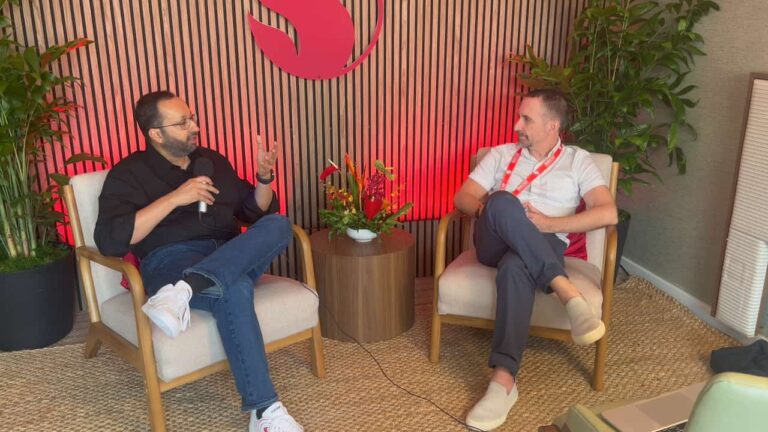
Disclosure: Qualcomm invited us to Snapdragon Summit 2026. All experiences were hosted, but no additional compensation was received.
A through line at last week’s Snapdragon Summit was Qualcomm’s latest initiative: personal AI. This effort sits at the center of a world in which users’ many devices – wearables, hearables, seeables etc. – ingest contextual and permissioned data that empower AI agents to do their thing.
As such, personal AI is infused with Qualcomm’s broader vision to power the agentic age. As we examined last week, the company believes we’re exiting the age of apps and entering the age of assistants. But what comes next – the destination it’s skating to – is the agentic age.
Compared to the act of prompting AI engines to execute one-off tasks and answers – common in the age of assistants – the agentic age will take the next step in achieving end goals for a given user. Agents execute multi-step workflows in the background to get all your life tasks done.
Tying that back to personal AI, agents will need ample context to get these tasks done correctly. And each person’s context will be different – an amalgamation of their profiles, proclivities, hopes & dreams. And all that will be formulated through opted-in and encrypted personal profiles.
Agentic Action
That brings us back to all those devices and the personal signals they can process. Personalized profiles will be formulated from the places you go, things you see, and preferences you say. Beyond enabling agentic AI, this vision is also relevant in that it brings AI to the physical world.
And a key piece of this puzzle is Qualcomm’s work to run models directly on its chips. That enables on-device AI, which in turn offers the lynchpin of this entire vision: privacy and security. Altogether, Qualcomm will be embedded across your devices while fueling agentic action.
So what does XR have to do with all of this? Eyewear will be one of those constellation devices, feeding in sensory inputs. In fact, it will be one of the most important inputs, given the contextual richness of video. That value is amplified by its first-person perspective (eye-level).
All the above meanwhile represents a vision well suited to Qualcomm’s positioning. That’s because it has spent much of the past decade diversifying itself beyond its stronghold in smartphones. It’s built a business around powering all those constellation devices, including XR.
From the Source
The remaining question is how all of this is playing out at the chip level today. We had the chance to sit down with Qualcomm SVP and GM of XR, wearables, and personal AI, Ziad Asghar, to find out. Check out the interview below and stay tuned for much more on personal AI.