
 by
by 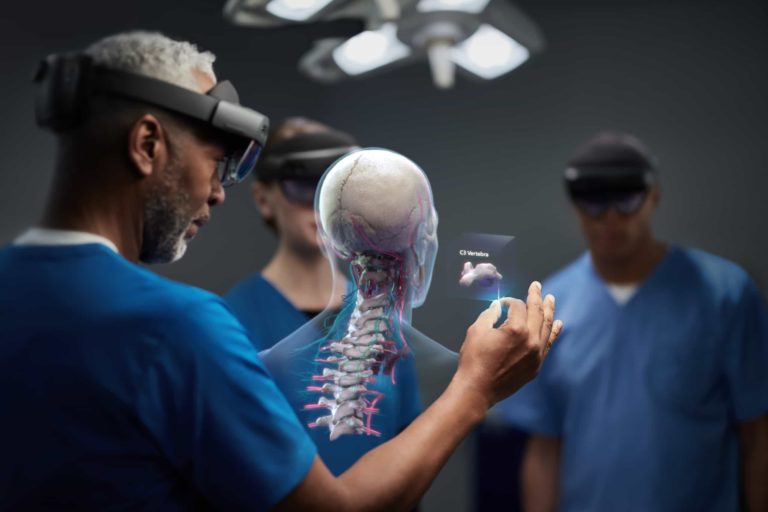

As new robotic platforms reach FDA clearance at an accelerating pace, pre-launch surgeon training programs have become a competitive differentiator — and the design decisions OEM teams make before launch day matter more than most realize.
FDA 510(k) clearance for a surgical robot opens the U.S. market. It does not open a surgeon’s willingness to adopt. The most persistent barrier between regulatory authorization and clinical adoption is what the industry consistently underestimates: the time it takes an experienced surgeon to build genuine confidence with a new system before performing a first case on a patient.
The surgical robotics pipeline has never been more competitive. CMR Surgical’s Versius Plus received 510(k) clearance in December 2025. SS Innovations submitted its Mantra system to FDA in the same month. Medtronic’s Hugo RAS platform launched its own simulation training program to support onboarding across urology, gynecology, and general surgery. Each of these systems requires a surgeon to internalize not only a new set of instrument mechanics, but an entirely new spatial framework: the 3D visualization layer, the console ergonomics, the instrument exchange sequence, the alarm response logic. A verbal orientation and a product manual do not build that competency.
What AR and 3D Simulation Actually Provide
The evidence base for simulation-based surgical training has been building for over two decades. A landmark randomized, double-blinded study published in the Annals of Surgery demonstrated that VR-trained surgical residents performed laparoscopic procedures faster and with significantly fewer intraoperative errors compared to a control group receiving conventional training alone. A 2022 meta-analysis of randomized controlled trials confirmed that virtual reality training improved standardized objective assessment scores and reduced task completion time across multiple surgical specialties.
For robotic surgery, augmented reality adds a dimension traditional simulation cannot replicate. A 2025 narrative review of AR in surgical training found that AR-enhanced training consistently improves objective performance metrics — including task completion time, error rates, and GOALS/OSATS scores — while reducing cognitive workload compared to conventional methods. For a surgeon learning a new robotic platform, this matters because the hardest element to teach is spatial: where the instrument tip sits relative to the anatomy, how end-effector movement maps to console input, what the 3D visualization field reveals that a 2D laparoscopic view does not.
Three-dimensional mechanism animation serves a distinct but complementary role upstream of simulation. Before a surgeon reaches a simulator, an animated walkthrough of the device’s mechanism — arm articulation, docking sequence, force feedback logic, field-of-view behavior — builds the mental model that makes subsequent simulator time faster and more productive. Teams that front-load 3D mechanism content before live system access report shorter paths to documented competency, because surgeons arrive at the console with the device’s spatial architecture already internalized.
Designing the Pre-Launch Training Architecture
Surgical robotics OEM teams doing this well are building tiered training sequences, not single-modality programs.
The first tier is passive and precise: 3D animated mechanism walkthroughs that give surgeons an accurate mental model of the device before first contact. These are not marketing videos — they are technical, anatomically calibrated sequences covering docking, articulation, visualization behavior, and alarm logic. The second tier uses a device-specific simulator, where surgeons complete objective competency tasks with scored, trackable metrics before advancing. The third tier applies AR overlays in a wet lab or cadaveric setting, giving surgeons operating experience with the system’s visualization layer active in an environment where errors carry no patient consequences. The fourth tier is the proctored first clinical case — by which point, a surgeon who has completed the preceding tiers arrives with meaningful preparation already behind them.
OEM teams that compress or skip tiers tend to encounter two downstream problems. First, the surgeon learning curve extends into the initial clinical cases, which is where adverse events and competency questions carry the most regulatory and commercial weight. Second, early post-launch performance data becomes harder to defend if pre-launch training documentation is thin — an increasing concern as the FDA’s scrutiny of human factors evidence across device submissions continues to grow.
As surgical robotics competition intensifies, pre-launch training architecture will increasingly separate platforms that convert clearance into clinical adoption from those that stall between the two. The training system is not an afterthought to device development — it is a core deliverable that regulators, clinical teams, and hospital procurement committees will eventually evaluate alongside the device itself.

Deepak Kumar
AR Insider Guest Author