
 by
by 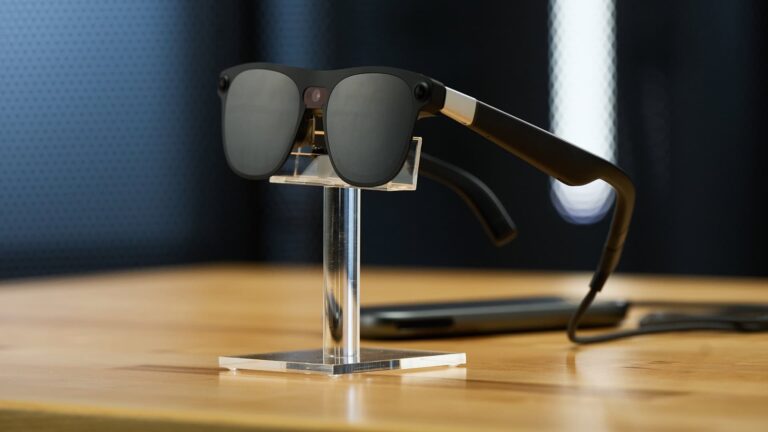
Ever since Android XR was announced last December, it’s been the subject of speculation and excitement throughout the spatial computing land. The thought is that it could do for XR what Android did for smartphones by breeding optionality, scale, and standardization.
In the past few months, the volume on that conversation has been amplified with new Google patent filings that signal possibilities for Android XR’s road map. And information has trickled out about Samsung – Android XR’s biggest OEM partner so far – and its XR hardware roadmap.
That roadmap came to life in 2025 with Galaxy XR, and will be followed in 2026 by non-display AI smartglasses to compete with Ray-Ban Metas. Elsewhere in Samsung’s roster could be AR display glasses – altogether covering Android XR’s range of devices that we recently examined.
But Android XR’s opportunity stretches beyond Samsung. As an open platform, it will be used by several manufacturers. They’ll accelerate their time to market by letting Google handle the OS while they focus on the parts they do best, higher up the stack. Again… just like Android.
Face Race
All the above isn’t new, and merely sets the stage for Android XR’s deployment over the coming months. Samsung was first out of the gate, but others will follow fast. So perhaps now is the time to revisit our Android XR analysis. What is it and how is it advantaged in XR’s face race.
One of its biggest advantages has already been stated: openness. Because the value proposition to OEMs is compelling — and the price is right — Android XR could scale quickly. That scale will in turn entice reach-driven developers and content creators to do their thing.
Another adoption driver will be Android XR’s foundations in an established platform. This lessens the learning curve for XR creation among a massive base of Android developers. There are also large libraries of Android apps that are portable and adaptable to Android XR.
Android’s established status also impacts enterprise adoption. Its familiarity to IT departments – an underrated XR adoption barrier – gives it a competitive edge. IT departments don’t like unfamiliar tech, which is one reason Microsoft, during its HoloLens era, was advantaged in enterprise XR.
But Android XR’s biggest advantage could come down to one thing: Gemini. Due to XR’s reliance on AI as a force multiplier, it could be the biggest source of competitive differentiation. As we’ve been saying a lot lately, SLAM is no longer the most important acronym in spatial computing.
The Race is On
To that end, Google could have a meaningful advantage in the looming XR platform race. When looking at the AI prowess of major platforms, Google is likely the strongest. There’s an argument to be made for Meta’s recent AI advancement and investment, while Apple has stumbled.
Here, AI positioning is swayed by recent investment and development where, again, Meta exceeds. But when looking at the biggest sources of value in AI – data – you can’t argue with Google’s positioning as the world’s search engine and knowledge graph for the past 25 years.
As for disadvantages – if there are any for Android XR – it could be a lack of vertical integration, as the platform powers a range of OEM hardware. For example, iPhones mostly exceeded Android smartphones for years due to an elegant cohesion of hardware and software.
This could be a bigger issue in XR where the need for tightly-integrated systems is heightened. Apple, as always, will have that vertical integration, as will Meta. Google could release flagship hardware (think: Pixel headsets), but most Android XR deployment will be on third-party gear.
Regardless of Google’s positioning, we’ll see greater competition in the aggregate, which is a good thing. The smartphone era’s competitive field was a two-horse race. The plot thickens in the XR era with the addition of Meta, Snap, and others that could emerge from the pack.