

XR systems engineer and inventor Lak Vijayaraghavan discusses immersive simulation, AI-native creator platforms, and the engineering innovations shaping the future of augmented reality while transforming the way people learn, create, and experience digital worlds.
Lakshminarayanan “Lak” Vijayaraghavan is an AR/VR systems engineer, inventor, and immersive technology architect whose career has included engineering the “Land on Mars” and “Walk on Mars” simulations at NASA Kennedy Space Center’s Astronaut Training Experience, developing foundational technologies for TikTok Effect House, engineering validation systems for Magic Leap, and creating interactive systems used across widely adopted AR and VR platforms. His work spans immersive simulation, creator platforms, enterprise augmented reality, and AI-assisted development tools, bringing together systems architecture, real-time graphics, and human-centered design to solve complex engineering challenges.

Among Lak’s technical contributions are four granted U.S. patents covering AR authoring workflows, AI-assisted creator systems, real-time preview architectures, and workflow orchestration technologies, together with engineering leadership across globally distributed product teams. He has also served as a technical reviewer, mentor, engineering interviewer, and member of TikTok Effect House’s Technical Design Committee, helping shape the long-term architecture and technical direction of one of the world’s largest AR creator ecosystems.
Building the next generation of immersive technologies increasingly requires engineers to solve problems that extend well beyond graphics or content generation. As AI becomes integrated throughout AR development, workflow architecture, validation systems, and creator experience are becoming just as important as rendering technology itself. In this interview, Lak discusses the engineering principles shaping AI-native creator platforms, technical leadership, immersive computing, and the future of augmented reality development.
ELLEN WARREN: Your engineering career has included developing the “Land on Mars” and “Walk on Mars” simulations at NASA Kennedy Space Center, enterprise AR systems at Magic Leap, and foundational creator technologies for TikTok Effect House. Although those projects serve very different audiences, they all depend on immersive technologies that must perform reliably in real-world environments. How have those experiences shaped the way you approach systems engineering and platform design?
LAK VIJAYARAGHAVAN: Those projects taught me to begin by understanding how a system can fail in actual use. At Kennedy Space Center, the visual experience was only one part of the problem. The more difficult engineering challenge was keeping a high-frequency simulator synchronized with a game engine operating at a different update rate. Even a slight timing drift causes the body to recognize that motion and visual response no longer agree.
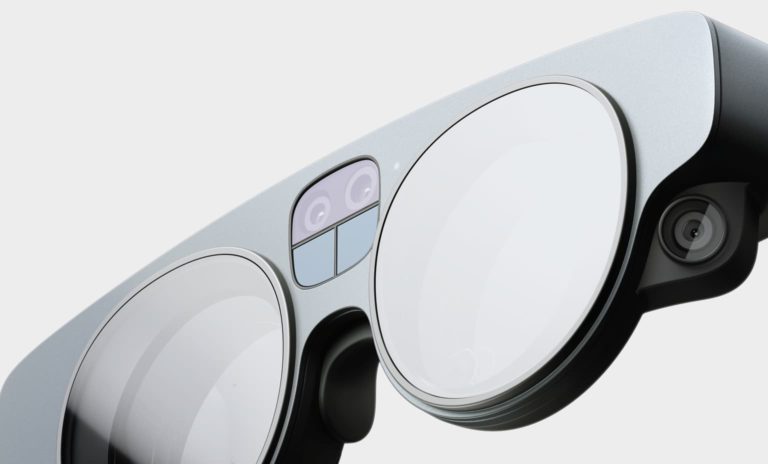
At Magic Leap, the same principle appeared at the sensor level. Camera, depth, and tracking data had to arrive with the accuracy and frequency required by the surrounding computer vision systems. A delayed or disrupted sensor stream could affect tracking and immediately break immersion.
Effect House presented the problem at a much larger scale. The primary failure point shifted from hardware synchronization to creator workflows. A creator losing context between different stages of production or encountering friction in the primary workflow could interrupt the creative process just as effectively as a technical failure.
Across all three environments, I learned that immersive systems are only as strong as the connections between their components. I now try to make timing, system state, runtime behavior, and user interaction observable early through frame rate measurements, sensor health, validation data, and product analytics. Performance matters, but it becomes meaningful only after the system is correct, measurable, and reliable in the environment where people actually use it.
EW: Your work spans immersive simulation, enterprise augmented reality, consumer creator platforms, and AI-assisted development tools. Although these environments appear very different, what engineering principles have remained constant across all of them?
LV: Although the technologies changed considerably, the underlying engineering principles remained remarkably consistent. The system has to solve a real problem for the person using it. A technically impressive experience has limited value if it does not fit the environment, remove meaningful friction, or help users accomplish what they came to do.
The most reliable way I have found to achieve that is through a tight feedback loop supported by test-driven development. We build a focused solution, place it in front of users early, observe what they do rather than only what they say, and use those observations to guide the next iteration. Real usage exposes assumptions that are difficult to recognize in a design document because users approach the product with different expectations, experience levels, and constraints.
User experience research and analytics complement one another by answering different questions. Design expresses how we believe a workflow should operate, while analytics reveals where it succeeds or breaks down in practice. The most useful measurements are not simple activity counts, but indicators showing whether users completed the intended journey, where they encountered friction, and whether a change genuinely improved the outcome.
That approach has remained consistent across simulation, enterprise AR, creator platforms, and AI-assisted development. Build close to the user, make important behavior observable, and allow each release to reduce uncertainty about the next one. Over time, those incremental improvements produce systems that are both more reliable and easier to use without sacrificing technical depth.
EW: You recently wrote about agent-centric workflows reshaping AR creation. In that article you suggested that the next major advance in creator platforms will come less from individual AI features than from agent-centric workflow architecture. Why do you believe workflow design is becoming more important than simply adding new AI capabilities?
LV: Access to capable AI models is becoming increasingly widespread across the industry. The models still differ, and those differences matter, but most platforms can adopt major advances within a relatively short period. As a result, an individual AI feature is difficult to sustain as a long-term competitive advantage.
The more durable advantage lies in the workflow surrounding the model. A creator may generate an asset quickly yet still spend substantial time integrating it into a project, reconstructing context, correcting inconsistencies, validating performance, and preparing it for deployment. Generation improves only one stage of the process if the surrounding workflow remains unchanged.
An agent-centric workflow changes the role of the system. Instead of functioning as another feature inside the editor, the agent becomes an operational layer that understands the existing project, identifies what is missing, selects the appropriate tools, makes targeted changes, validates the results, and maintains continuity across multiple stages of development. The creator remains in control of the direction, while the system manages much of the work between disconnected parts of the workflow.
That distinction is becoming increasingly important because model capability alone does not determine whether an experience is useful. The platform must still understand creator intent, preserve project state, expose the right actions, and verify that the output is ready for use. As AI models continue to improve across the industry, I expect workflow architecture and validation systems to become the primary sources of long-term differentiation.
EW: Your engineering contributions include patented creator workflows, AI-assisted authoring systems, real-time preview architectures, and immersive simulation technologies. What makes building tools for creators fundamentally different from developing traditional software applications?
LV: Traditional software usually begins with a defined task and a reasonably clear completion state. Creator software begins with intent, and intent can be incomplete, subjective, and different for every person. Two creators may use the same tools, follow entirely different workflows, and still produce equally successful results. The engineering challenge is therefore not to enforce one correct path, but to support many valid paths without making the product confusing.
The difficulty lies in lowering the technical barrier without limiting creative flexibility. Many creators do not have backgrounds in programming, game engines, real-time graphics, or visual design. The platform should help them make meaningful progress without requiring them to understand every underlying system, while still giving experienced creators the control needed to build beyond common use cases.
At Effect House, that meant treating guidance, contextual assistance, reusable systems, preview, validation, and analytics as parts of a single creator journey. New creators may need the platform to explain what is possible and help structure their first decisions, while experienced creators need deeper capabilities and reliable feedback as projects become more complex.
The workflow also extends beyond publication. Creators need to understand how people experienced their work, where engagement changed, how it performed across devices, and what should improve in the next iteration. Publishing therefore becomes part of an ongoing learning cycle rather than the end of the creation process.
Ultimately, success is not measured simply by whether a sequence of actions was completed. It is measured by whether the platform helped someone translate an idea into an experience that reflects their intent and can continue improving through use and feedback.
We’ll pause there and pick things up in Part 2 of this series…

Ellen F. Warren
AR Insider Guest Author