
 by
by 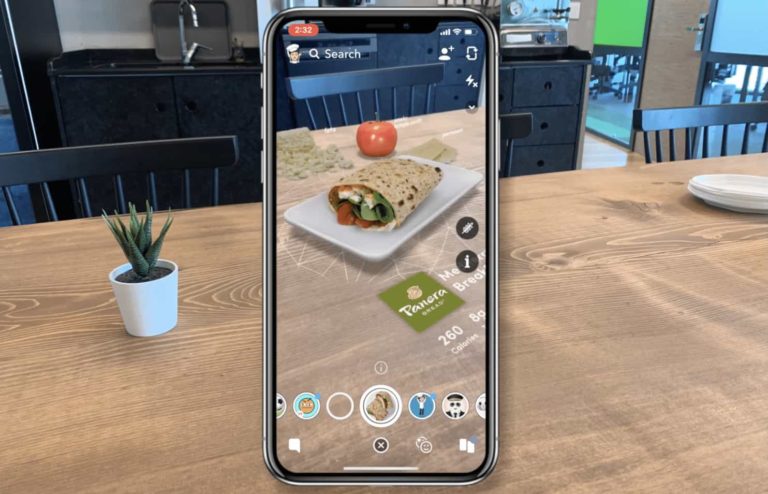
Immersive marketing continues to be an opportune, yet still challenged, segment. Sitting at the intersection of brand marketing and spatial computing, it includes things like sponsored AR lenses that let consumers interact and engage with brands, or virtually try on products.
Driving immersive marketing are a few key elements. Lens creation software arms brands and developers with low-code tools to author AR experiences. Meanwhile, networks like Snapchat and TikTok likewise offer the ability to amplify lenses throughout their social graphs.
There’s also a real business case, which can be seen in the performance metrics around AR campaigns. And though the future of AR is headworn, we’re mostly talking about AR marketing on smartphones. That’s where the scale lies… and brand marketers are all about scale.
This is the topic of a recent report from our research arm, ARtillery Intelligence, including ecosystem analysis and case studies from real AR marketing campaigns. The report joins our excerpt series, picking things up in this installment with a look at AR marketing’s biggest drivers.
By the Numbers
One of AR’s biggest revenue categories is brand marketing. According to ARtillery’s Spatial Computing Forecast, it’s projected to grow from $6.6 billion in 2025 to $10.3 billion by 2030. This includes brand spending to create and distribute immersive experiences, such as virtual try-ons.
From a user perspective, they can interact with these experiences through various touchpoints that activate their smartphone cameras and overlay branded animations on the real world. This is often done for the sake of upper-funnel product awareness or lower-funnel shopping.
These outcomes can be accelerated by paid amplification, which takes shape in sponsored lens programs from Snap and TikTok. That paid amplification piece – a subset of the AR marketing revenue figures above – is projected to grow from $1.34 billion in 2025 to $3.11 billion by 2030.
Brands engaged in AR marketing can also rely on organic distribution and virality that happens outside of paid channels. That route is harder to achieve scale but it’s possible, utilizing channels such as a brand’s app, web presence (web AR), signage (via QR codes), and product packaging.
Feedback Loop
So what’s driving immersive marketing? For one, brands are attracted to AR’s ability to demonstrate products in immersive ways. That appeals to creative sensibilities – erstwhile stuck in 2D media and confining formats like mobile banners. AR offers them greater creative capacity.
Brand adoption is also driven by the fact that AR is working. There’s a feedback loop of campaign performance, results, and ROI. This causes AR investment to grow through recurring campaigns, as well as new entrants that hear about its effectiveness through case studies.
Another point of appeal is AR marketing’s ability to span the consumer purchase funnel, as introduced earlier. It’s conducive to upper-funnel reach and lower-funnel response. This is a rare attribute in advertising media, as a sliding scale usually exists between endpoints of the funnel.
AR marketing can span this funnel by achieving high-reach in places like Snapchat’s Lens Explorer. From there, it can achieve high performance when users activate immersive product try-ons. The resulting product perspective and confidence are known to boost conversion rates.
We’ll pause there and circle back in the next installments of this series with a look at the challenges that counterbalance the above drivers. Later installments will show rather than tell with campaign case studies. Meanwhile, check out the full report.