
Welcome back to our weekly roundup of happenings from XR and AI realms. Let’s dive in…
The Lede
OpenAI and Disney have signed a three-year agreement that includes a billion-dollar equity investment. OpenAI licenses the use of 200 Disney-owned characters in OpenAI’s Sora video generation tool. Under the agreement, Sora can generate short videos and images featuring characters from Disney, Pixar, Marvel, and Star Wars, with restrictions that exclude actor voices and likenesses. Disney retains approval and governance rights over how its intellectual property is used. Disney will also use OpenAI tools internally and may distribute selected user-generated Sora content through its platforms.
Feeling Spatial
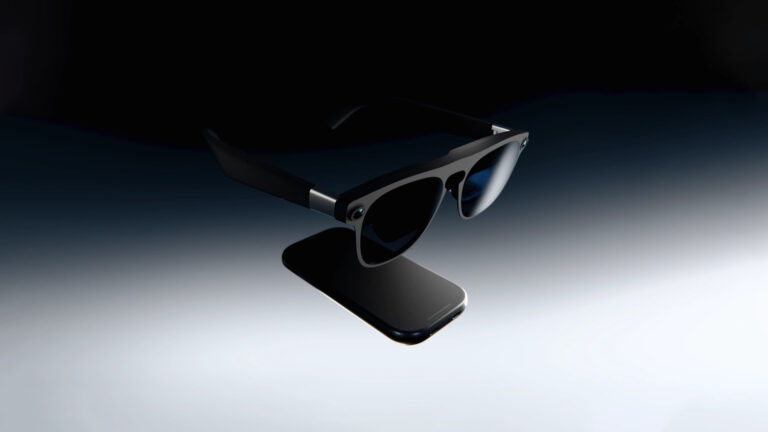
XREAL Aura is a see-through AR glasses prototype running Google’s Android XR platform, slated for a 2026 launch. The first of the new Android devices to come from the Google – Qualcomm partnership, the design offloads weight, battery, and compute to a tethered pocketable puck that connects to the glasses and acts as both the processor and input interface. The glasses offer an immersive Android XR experience overlaid on the real world, with a ~70° field of view, sharper and brighter displays, and new optics closer to a conventional glasses form factor. Early impressions note the lack of eye-tracking and some visual artifacts, but the electronically-controlled dimming lenses stand out as a unique Android XR feature.
Meta has acquired the AI wearables startup Limitless, which was formerly known as Rewind. Limitless built an AI-powered pendant device that records, transcribes, and summarizes real-world conversations and interactions. Under the deal, Limitless will stop selling new hardware and will support existing users for about a year as its team and technology get integrated into Meta’s hardware efforts, particularly within Reality Labs aimed at AI-enabled consumer devices. Financial terms of the deal were not disclosed. The move aligns with Meta’s strategy to expand its AI-wearables roadmap.
The AI Desk
The New York Times filed a federal copyright lawsuit against AI startup Perplexity AI, alleging the company used Times articles without permission to power its generative AI and search services. The complaint says Perplexity copied, displayed, and distributed copyrighted journalism — including summaries and near-verbatim text — without a licensing agreement, ignoring prior cease-and-desist demands. The Times is seeking damages and injunctive relief to stop the continued use of its content. This legal action adds to mounting litigation by major publishers against Perplexity over alleged unauthorized use of proprietary material in AI products.
Former Miramax CEO Bill Block has launched GammaTime, a mobile micro drama streaming platform that incorporates AI across development, production, and distribution. The company raised fourteen million dollars in seed funding from investors, including Vgames, Pitango, Alexis Ohanian, Kris Jenner, and Kim Kardashian. GammaTime focuses on vertical short-form scripted series designed for phones, with more than twenty titles at launch, including projects from CSI creator Anthony E. Zuiker. The platform uses AI tools to accelerate scripting, localization, and audience testing, applying data-driven feedback to refine story performance. GammaTime is positioned around low-cost production and rapid iteration in mobile native entertainment.
Tavus, an AI research lab, is bringing back its wildly popular AI Santa experience to join the PALs lineup. PALs are human-like AI companions you can text, voice and have face-to-face video chats with. Santa remembers past conversations, understands expressions and tone, and can even reach out to you. Tavus’ models power the experience: Phoenix-4 is a real-time full-face emotional rendering model, Sparrow-1, is a leading multimodal turn-taking model, and Raven-1 provides the ability to see as humans do with contextual perception. Today, thousands of enterprises and developers also use Tavus to create their own scalable, human-like AI video agents.
Spatial Audio
For more spatial commentary & insights, check out the AI/XR Podcast, hosted by the author of this column, Charlie Fink, and Ted Schilowitz, former studio executive and futurist for Paramount and Fox, and Rony Abovitz, founder of Magic Leap. This week we will be recording at Rony’s Synthbee symposium. You can find it on podcasting platforms Spotify, iTunes, and YouTube.
 Charlie Fink is an author and futurist focused on spatial computing. See his books here. Spatial Beats contains insights and inputs from Fink’s collaborators including Paramount Pictures futurist Ted Shilowitz.