
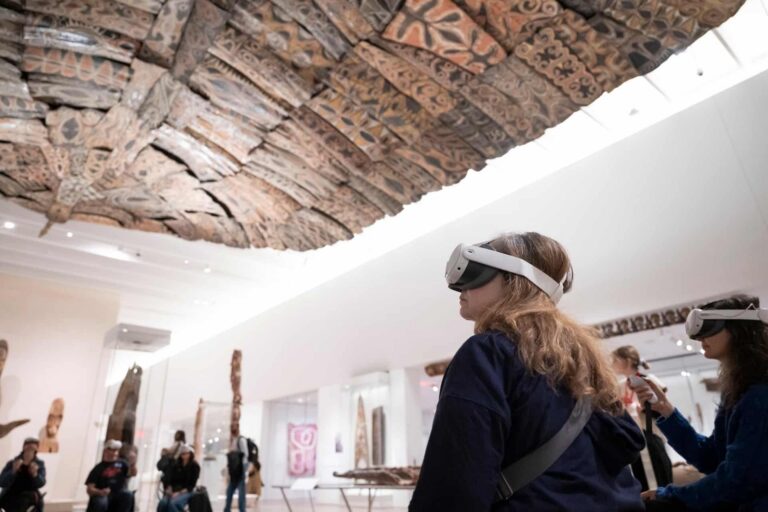

The Met is home to thousands of historic treasures, from the world’s oldest piano to ancient Greek armor, so it might be surprising that emerging technology is an institutional priority. Virtual reality and other immersive technologies are a critical way that we engage with audiences in pursuit of our mission to connect people to creativity, knowledge, ideas, and one another. As one of the oldest and largest art museums in the United States (established in 1870), we’re using XR to connect but also to learn as an institution. And we’re just getting started.
Our Imaging team began experimenting with 3D scanning over a decade ago, and in the years since, we’ve explored immersive platforms as a means to open up access to our collection both on-site and at home. Each project has been a bit different, from content-rich deep dives on colorful ancient sculptures such as Chroma AR (live link), to finding virtual Roblox skins in our physical museum, to launching high-res open 3D models on our website.
This past fall, we launched two new virtual reality experiences for the Meta Quest and web browsers (in WebGL): Dendur Decoded and Oceania: A New Horizon of Space and Time, which explore the Museum’s beloved Temple of Dendur and monumental works from our Oceanic Art collection. What happened next was pretty remarkable.
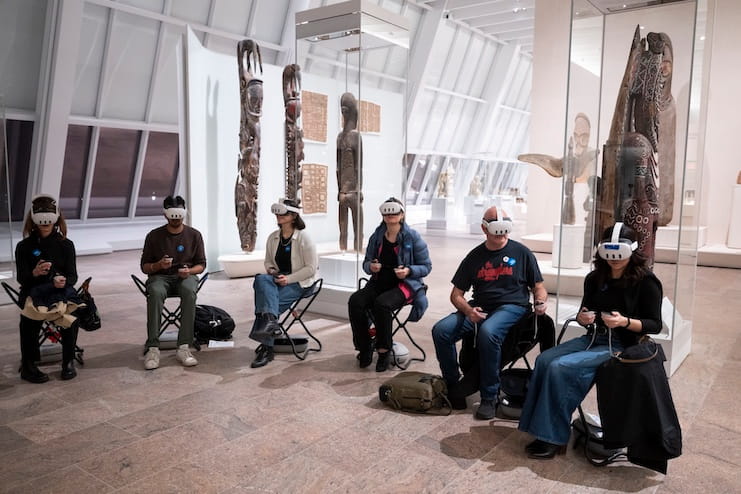
With our digital projects, we consider reach, engagement, and impact as measures of success: did we reach the audience we wanted? How (or how long) did people engage? Did their engagement meaningfully impact them as people? In the initial first quarter post-launch, we saw significant virtual engagement as well as IRL conversion. A majority of the users are returning to the virtual exhibits and artifacts, with 15% in virtual reality and 85% exploring via a web browser. People are engaging for a long time, with 15% of visitors to Dendur Decoded spending 15+ minutes in the experience. On the web, our conversion rate from the experience to tickets and memberships is higher than our baseline—an exciting development hinting at what we’ve known for a long time: digital experiences with art often ignite a desire to see the real thing.
This project is a part of a long-gestating effort that is both deliberate and exploratory. Our Imaging team first released a single 3D model with interpretive audio—the Zemi Figure—which is also a demo on Apple’s AR Quick Look Gallery. We built upon what we learned there to launch Chroma AR. There, we had broad but somewhat shallow engagement, so we launched the related (but stripped-down) in-gallery feature Cycladic 3D. And, of course, we’ve now launched all of these models (including those from Dendur Decoded and Oceanina) as a part of our growing library of 3D scans. We’re seeing consistent interest, partner support, and we’re constantly learning about where our audiences want to go next.
We have two big principles when it comes to emerging technology work: we lead with story ( we don’t do “tech for tech’s sake”), and we focus on authenticity: to our mission and collection, to our audiences, and to the tech itself. Sometimes these are in healthy tension: in our XR projects, we let visitors pick up and “touch” objects in ways we never would in person. We also don’t allow some objects to be freely manipulated—aiming to respect their original context (in some cultures, turning an object upside down is deeply disrespectful). It’s a tricky balance: in the former, are we setting up unrealistic expectations for a museum visit? In the latter, are we annoying our VR users who are accustomed to agency and free play? For us, it’s crucial to continue exploring to find the edges of these ideas, and set meaningful standards and guidelines.
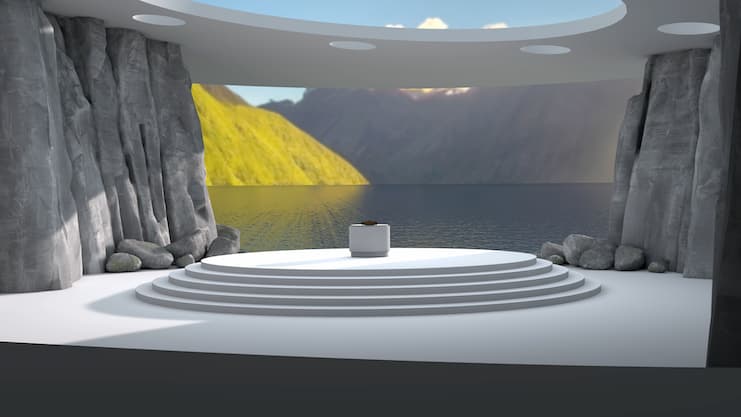
One way we’re doubling down on standards is with color accuracy. Our aim is for your experience with an object—whether it be online, in-person, in a book, etc—to be uniform. While ultra-realism is not appropriate for a lot of virtual representations, when we share artworks as “real objects,” we want it to feel as authentic as possible. We want new and longstanding patrons to feel how seriously we’re taking emerging media while keeping experiences dynamic and awe-inspiring.
As I head to Long Beach to present on our emerging technology work at AWE USA, I’m most curious to hear from platforms, developers, and peer institutions who are interested in iterative, sustainable development of XR and 3D-based projects.
We’re just getting started with these incredible technologies, and we are eager to learn, build, and connect with those working in the immersive sector.
 Brett Renfer is Senior Project Manager, Emerging Technology at The Met.