
 by
by 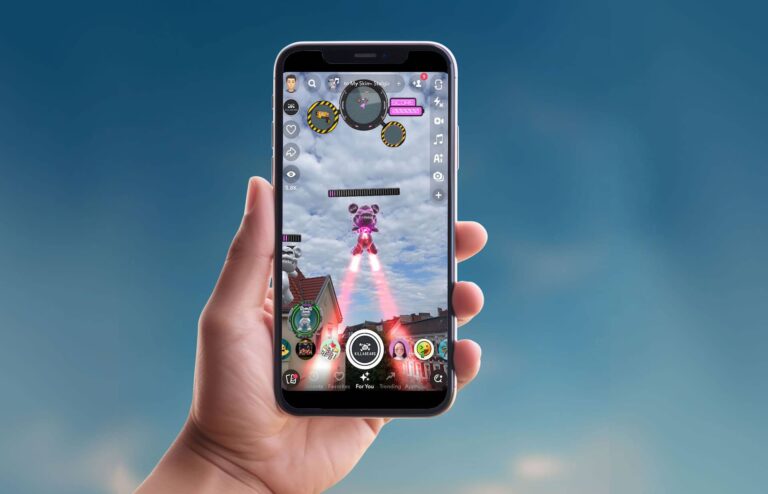

AR continues to present immersive possibilities to the gaming industry. Your surroundings can become an active part of the gaming experience. This has been the case for a while, given everything from Pokémon Go to Snapchat Lenses that are mini games. But does the rise of AI change the game?
Augmented & Virtual
Outside of the above examples and a few others, most gaming that happens in the broader XR domain has been on the virtual end of the spectrum. These tap into VR’s immersion and positional tracking to create levels of interactivity that are visceral and appealing to a subset of gamers. AR’s inherent capabilities offer a similar but different foundation for games. For example, in some cases, it’s better to be less immersed in the action so that the real world can play a part in the experience, or experiences can be more social and less isolating.
AR Gaming in the Present
One of the most widely recognized examples of AR gaming is, again, Pokémon GO, which brought augmented reality into the mainstream in 2016. Its usage peaked around that time and it’s no longer the media darling it once was in the tech press. Though you don’t hear about it much anymore, it’s still sustaining in terms of both user engagement and revenue. Niantic sold the game to Scopely in May of last year, so that it could focus on its spatial platform, now under the banner of Niantic Spatial. That move sparked a new chapter for Pokémon Go. And we meanwhile see other creative attempts at similar user experiences, such as Monsarrat’s Landing Party.
Places Have Meaning
The theme in all of these experiences is to transform everyday environments into interactive game spaces. There’s creative range in that AR maps reflect real-world layouts, and AR locations anchor gameplay to physical places. Combining GPS data, smartphone cameras, and real-time mapping means players can explore in interactive ways. Experiences are built around locations, which raises a compelling opportunity because places have meaning. This offers a creative canvas for AR developers to tap into that meaning, and put a creative spin on it. It also incidentally can incentivize developers, given that location-based monetization (think stores, restaurants, etc.), can be promoted in organic ways.
Intelligent & Immersive
Back to AI’s potential to elevate AR gaming, it could unlock additional creative possibilities by offering responsive, evolving gaming experiences. It can create persistent game worlds mapped onto the real world. Dynamically generated game environments could replace pre-built levels, with local landmarks and happenings in one’s surroundings becoming a part of the gameplay. Actions of other players could even permanently alter a virtual area.
AI is also likely to play a large role in personalization in the future. Real-time analysis of player behavior could allow for a tailored gameplay experience, so two players in the same neighborhood could have bespoke missions and challenges.
Under the Hood
AR gaming has a plethora of technical challenges that game developers and AR tech itself must contend with. Core challenges include synchronizing user location, scanning environments, and merging real-world data. These rely on precise sensors, such as accelerometers, alongside more advanced systems. AI processing adds another layer by letting systems interpret data and generate content dynamically.
This powerful technology requires fast data exchange and significant computational power. Low latency, bandwidth, and edge computing are all critical for smooth real-time spatial experiences. This level of tech demand extends to console and PC video games as well, where file sizes exceeding 100GB are increasingly common.
The growing complexity and data demands of augmented reality games will require supporting infrastructure to keep pace as it seeks to expand and offer more immersive experiences. It will also be a driving factor in whether AR gaming can grow to its market potential in terms of projected revenue for developers and game makers.
Adaptive & Persistent
Artificial intelligence and other emerging tech are expected to play a meaningful role in pushing AR gaming forward by making experiences more adaptive and persistent. Local events based on AR locations and AR maps could become a common experience for players of all ages.
 April Miller is a senior writer at ReHack Magazine and editorial contributor at AR Insider. She specializes in VR/AR, IoT, and business technology. See her work here and follow her @rehackmagazine.