
 by
by 

Over the past few years, Pikd has run more than twenty augmented reality activations for brands including Red Bull, Burger King and the London Design Biennale, across the UK and Kazakhstan. That is enough campaigns to see a pattern, and the pattern is uncomfortable. Most branded AR does not work, and it tends to fail for the same reason every time.
The reason is that the industry treats AR as a spectacle. A brand wants a moment: a face filter, a floating 3D logo, a thing that makes someone say wow and take a screenshot. It gets measured in impressions and views, the same currency as a banner ad, and by that measure it often looks fine. But a screenshot is not a customer. The wow fades in seconds, nobody actually moves, nothing changes, and three weeks later there is nothing left but a case-study video.
Action, Not Reaction
The activations that did something real had a different shape, and after enough of them the differences are not mysterious.
They asked for an action, not a reaction. The ones that worked did not end at “look at this.” They sent people somewhere, to a store, a stand, a specific corner of an event, and gave them a reason to finish something once they arrived. The AR was the hook, not the whole experience. A reaction is worth a view. An action is worth a visit.
They used the place. A digital object tied to a real location is remembered in a way that a filter in a feed is not. People remember the challenge they did with friends outside a particular building far better than any ad they scrolled past. Location is not set dressing, it is part of the memory and part of the value, and most branded AR throws that away by living entirely on the screen.
They were scarce and timed. Limited rewards, a closing window, a hotspot with a cap. Scarcity is what turns a nice idea into a reason to go now rather than later, which in practice means never.
And they measured the right thing. Not views. Visits, completions, collections, redemptions. Verified real-world action is harder to game and worth far more than attention, and the brands that insisted on measuring it got campaigns that were built to deliver it.
The Throughline
The throughline is a shift the whole space still needs to make, from measuring attention to measuring action. AR is one of the few digital formats that can actually move a person through physical space to a real place to do a real thing. Measured as a spectacle, it will always look like an expensive novelty. Measured as a way to produce action, it starts to compete with the rest of the marketing budget on the only ground that matters, which is whether anyone did anything.
I should be honest about the hard part, because pretending otherwise is how this industry keeps overpromising. Even the good activations are difficult, and the difficulty is not the launch. It is the gap between campaigns, when there is no active reward and no reason to open anything. AR that only works during a paid burst is not a platform, it is an advertisement with better production values, and the teams who deny that are the ones whose numbers collapse the day the campaign ends.
Not a Tech Problem
None of this is a technology problem. The headsets, the phones, the tracking, the rendering, all of it is good enough now. The problem is intent and measurement. Branded AR will keep disappointing for as long as it is bought like a spectacle and judged like a billboard. Treat it instead as a way to get real people to go somewhere and do something, measure that and nothing else, and it stops being a gimmick. Most of the industry is not doing that yet, which is precisely why the few who do stand out.
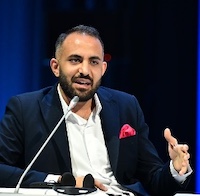
Abtin Aghagolian
AR Insider Guest Author